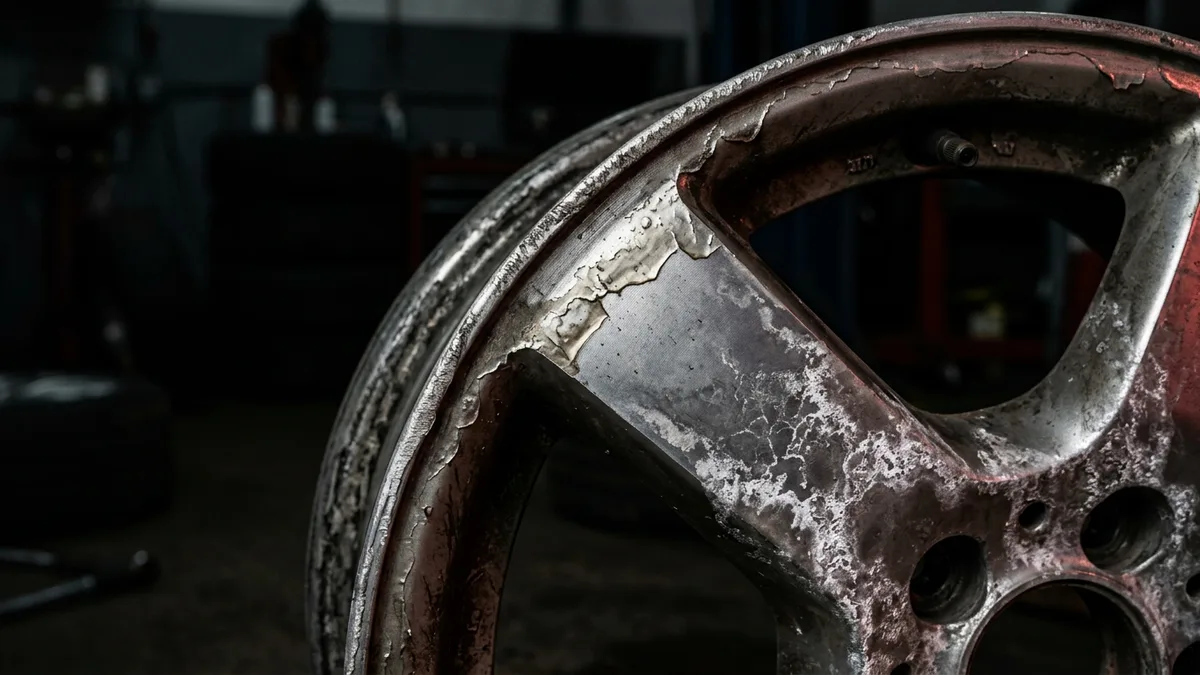
A wheel can look perfectly presentable one month, then develop cloudy patches, flaking edges or white marks beneath the finish the next. If you are asking why are alloys losing lacquer, the short answer is that moisture has found a route beneath the protective clear coat. Once that seal is broken, the problem rarely improves on its own.
Lacquer loss is common on UK roads, particularly after winter. Salt, standing water, stone chips and kerb damage all take their toll. The good news is that a properly refurbished wheel can be stripped, repaired and refinished to restore both its appearance and its protection.
What does lacquer do on an alloy wheel?
Most painted and diamond-cut alloy wheels have a clear lacquer layer over the colour or machined metal finish. It gives the wheel its gloss, but its more important job is to protect the alloy from air, water, road salt and contamination.
Alloy wheels are generally made from aluminium-based metal. Aluminium does not rust in the same way as steel, but it does oxidise. When water reaches exposed metal, oxidation can spread under the lacquer and lift it from the wheel. That is why a small chip can turn into a much larger patch of peeling or bubbling finish.
On a painted wheel, this often appears as flaking clear coat or rough, white corrosion around the edge of a damaged area. On a diamond-cut wheel, it can look like dull, milky patches beneath the lacquer, usually around spokes, the rim edge or the centre cap area.
Why are alloys losing lacquer in the first place?
There is rarely one single cause. In most cases, the lacquer has been compromised by an impact, wear, poor preparation during an earlier repair, or repeated exposure to harsh road conditions.
Kerb damage and stone chips
A light kerb scrape may seem cosmetic, but it can cut straight through the lacquer and paint to the bare alloy. The same applies to stone chips caused by loose grit and poor road surfaces. Water enters through the damaged edge, then travels beneath the surrounding coating.
This is why lacquer peel often starts near the outer rim. It is the part of the wheel that takes the most punishment when parking, driving through potholes or travelling on dirty winter roads.
Road salt, moisture and winter driving
Glasgow weather is not kind to alloy wheels. Rain alone is not usually the issue, but rain mixed with road salt, grit and brake dust creates a highly corrosive layer on the surface. If the lacquer is already chipped, that contamination can quickly reach the alloy beneath.
Wheels that are not cleaned regularly through winter are more likely to show corrosion around the bead area, spoke edges and inner barrel. The inner face matters too. It may be less visible, but it is exposed to the same salt spray and can suffer from neglected finish damage.
Brake dust and harsh cleaning products
Brake dust is abrasive and can be corrosive when left to bake onto a warm wheel. Strong acidic wheel cleaners can also damage a tired clear coat, especially if they are used repeatedly or left on for too long.
A suitable pH-neutral wheel cleaner, used with a soft brush and rinsed thoroughly, is the safer option. It will not repair failed lacquer, but it helps prevent further stress on a sound finish.
Previous refurbishment problems
Not every wheel refurbishment is carried out to the same standard. If corrosion was not fully removed, the surface was not correctly prepared, or the lacquer was applied poorly, the finish may fail early. Peeling around spoke corners, sharp edges or the tyre bead can point to weak adhesion from a previous coating process.
Cheap cosmetic repairs can look acceptable at first, then fail after a single winter. A lasting result depends on stripping the old finish properly, dealing with corrosion, completing any necessary wheel repair, and applying the new coating in controlled conditions.
Diamond-cut wheel limitations
Diamond-cut alloys are especially vulnerable to lacquer loss. Their bright face is created by machining a fine layer from the wheel, then applying clear lacquer over the exposed metal. The finish looks sharp, but the protective barrier has to remain intact.
Once the lacquer is chipped or begins lifting, moisture can creep across the machined face. Diamond-cut wheels can be refurbished, but there is a limit to how many times they can be recut safely because each process removes a small amount of metal. A specialist inspection is the sensible way to establish whether another diamond cut is suitable or whether a full painted finish would offer better long-term durability.
Is peeling lacquer just cosmetic?
At the start, lacquer loss is often a cosmetic issue. The wheel may still be structurally sound and safe to drive on. However, leaving it untreated allows corrosion to spread, which can make refurbishment more involved and more expensive later.
The key distinction is between surface finish failure and structural damage. Peeling lacquer, staining and surface oxidation are not the same as a crack, buckle or impact-related distortion. If you have hit a pothole or kerb heavily, notice vibration through the steering wheel, find a tyre losing pressure, or can see a crack in the rim, the wheel needs a professional safety inspection rather than a cosmetic touch-up.
Can you stop lacquer peeling from getting worse?
You cannot bond failed lacquer back onto the wheel, but you can slow further deterioration until the wheel is refurbished. Wash off road salt and brake dust regularly, especially during winter, and avoid aggressive chemicals or hard brushes that can lift more of the coating.
It is also worth avoiding DIY touch-up paint over bubbling or corroded areas. A small touch-up can help disguise a fresh, clean chip in some cases, but it will not stop corrosion already trapped beneath the lacquer. Covering it without removing the affected material often leaves the underlying problem to continue spreading.
Keep an eye on the tyre bead area too. Corrosion there can affect the seal between tyre and wheel, potentially leading to slow pressure loss. That is one reason an experienced workshop will inspect more than the visible face of the alloy.
How professional refurbishment fixes failing lacquer
The right repair depends on the wheel's finish, the extent of corrosion and its overall condition. A professional refurbishment is not simply a fresh coat over the top. The failed lacquer and old finish need to be removed so the wheel can be assessed and prepared correctly.
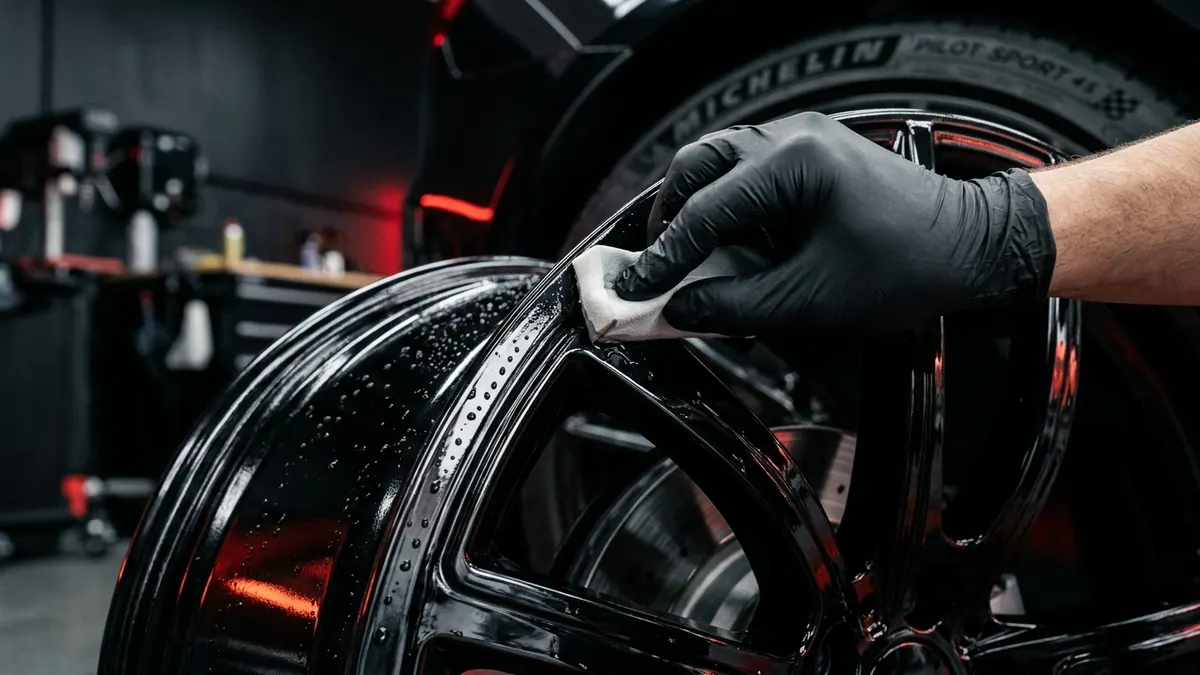
For painted alloys, the wheel is normally stripped back, corrosion is treated, damage is repaired where appropriate, and the wheel is refinished with a durable colour coat and clear lacquer. Powder coating is a popular option for many wheels because it provides an even, hard-wearing finish that stands up well to everyday use.
For diamond-cut wheels, the process can involve repair, preparation, precision machining on a diamond-cut lathe and a new lacquer coating. The wheel must be within safe machining limits, which is why the inspection stage matters. If it is not suitable for another cut, a painted or custom-colour finish can give the wheel a clean, long-lasting new look without removing more material.
At Wheel Fusion, the focus is always on the condition of the wheel as well as the finish. If a wheel has signs of buckling, cracking or weld damage, those concerns should be addressed before cosmetic work begins. A good refurbishment should leave you with a wheel that looks right and has been checked with safety in mind.
When should you arrange an inspection?
Arrange an inspection when lacquer starts lifting, when white corrosion is spreading beneath the finish, or when the wheel has a noticeable rough or cloudy appearance after cleaning. Acting early usually gives more options and prevents a small damaged area from turning into widespread corrosion.
If the wheel has also suffered a hard impact, loses air, or causes vibration, do not wait for the finish to worsen. Get the wheel assessed for structural damage and tyre-sealing issues at the same time.
A peeling alloy does not need to spoil the look of your car or become a bigger repair than necessary. Clean it carefully, avoid masking over the problem, and have the wheel checked before corrosion gets further under the finish.