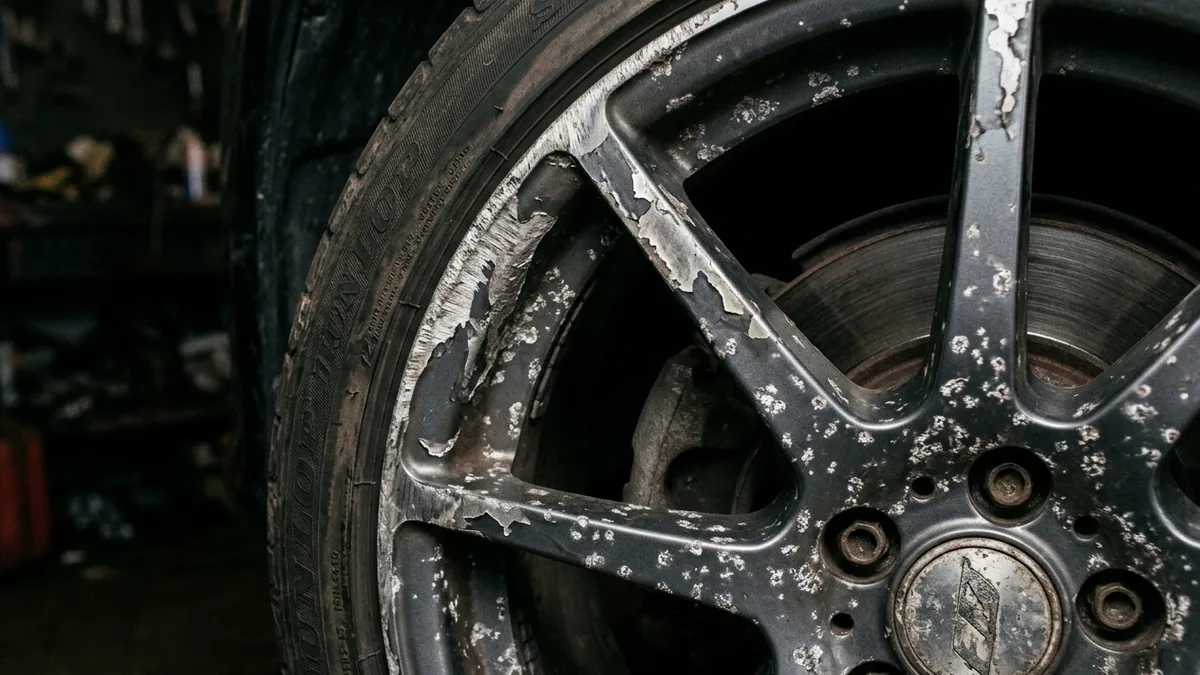
Alloy wheels are built to last – but they're not indestructible. Knowing the early signs of wear or damage can save you money: small cosmetic issues are cheap to fix, but left unattended they develop into more significant problems that cost considerably more to address.
1. Kerb Damage and Scuffs
Kerb scuffs are the most common alloy wheel damage. The rim lip catches a kerb and leaves a gouge or scrape – ranging from a light scuff in the lacquer to a deep gouge into bare aluminium. Light damage is purely cosmetic and cheaply repaired. Deeper damage that exposes bare metal should be repaired promptly because bare aluminium corrodes rapidly.
2. White or Grey Corrosion on the Rim Edge
White or grey pitting and powdering on the rim face or edge is aluminium oxide – the product of aluminium corrosion. It forms when the lacquer or paint protecting the wheel fails and moisture gets to the bare metal. Once corrosion starts, it spreads – what starts as a small patch around a kerb scuff will eventually cover the whole rim edge if left untreated.
3. Lacquer Peeling or Bubbling
Lacquer failure usually starts at the rim edge or where the wheel has been damaged. You'll see the clear topcoat lifting, bubbling, or peeling away from the painted surface. Once the lacquer starts to peel, moisture immediately begins to attack the paint and aluminium underneath. This is a strong indicator that a full refurbishment rather than a spot repair is needed.
4. Vibration or Wobble at Speed
If you feel vibration through the steering wheel at certain speeds, or notice a visible wobble when the wheel is spinning, this is not a cosmetic issue – it's a structural one. The most likely cause is a buckled or bent wheel, most commonly from a pothole impact. This requires professional assessment and straightening, not a cosmetic repair.
5. Slow Puncture That Keeps Recurring
If the same tyre keeps going down despite no visible tyre damage, the issue may be the wheel rather than the tyre. A crack in the alloy near the bead seat can allow air to escape. A cracked alloy is a safety issue – get it assessed immediately.
6. Dull, Faded Finish
Paint and lacquer fade over time through UV exposure. If your wheels look dull, chalky, or have lost their lustre, a refurbishment will restore them fully. This is more about aesthetics than safety – but it's worth addressing to maintain the overall appearance of the car.