A sharp jolt through the steering wheel after a pothole is easy to dismiss, especially when the tyre still looks fine. Yet the top causes of buckled wheels are often everyday road hazards that can leave the rim slightly out of shape and gradually affect how your car drives. Catching the problem early can protect your tyres, suspension and safety, while avoiding a more costly repair later.
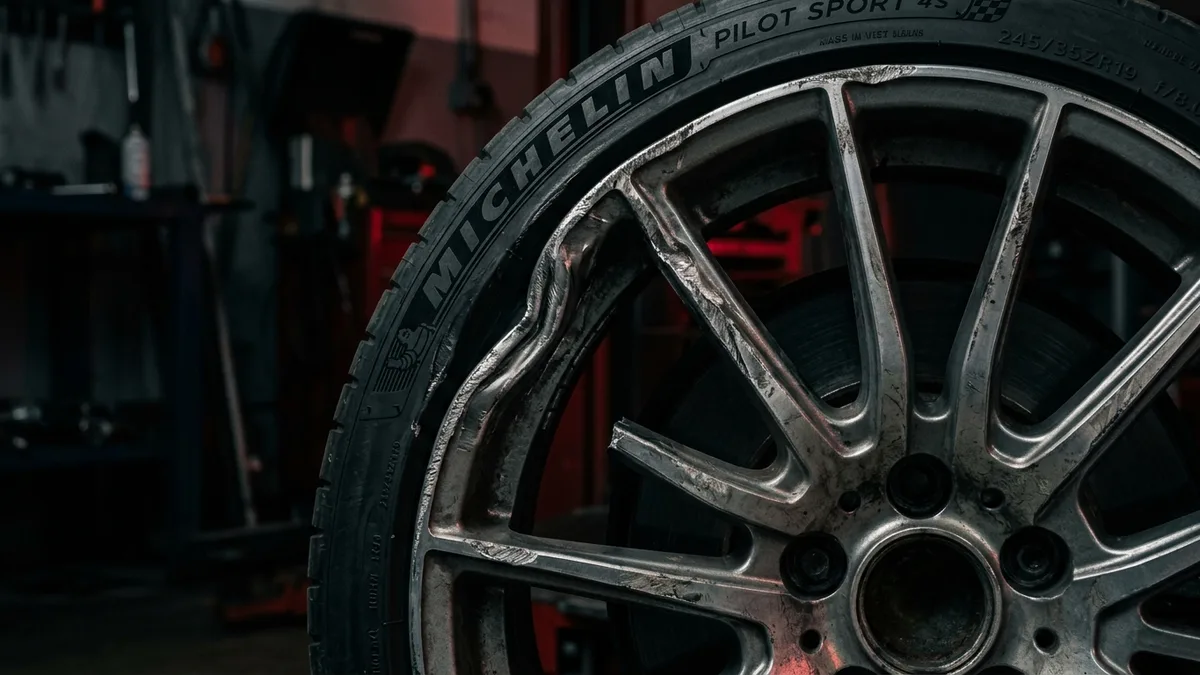
A buckled wheel is a wheel that is no longer perfectly round or true. The distortion may be on the inner edge, where it is difficult to spot without removing the wheel, or on the visible outer lip. Even a small bend can prevent the tyre from sealing correctly, create vibration and place uneven loads on other parts of the vehicle.
The top causes of buckled wheels
Potholes and broken road surfaces
Potholes are one of the most common causes of buckled alloy wheels across Glasgow and the wider area. When a tyre drops into a deep hole or strikes its sharp edge, the impact travels directly through the tyre sidewall and into the rim. At speed, or with a heavily loaded vehicle, that force can be enough to bend the wheel's inner barrel.
Low-profile tyres offer less cushioning between the road and alloy, so vehicles with larger wheels can be more vulnerable. This does not mean standard-profile tyres are immune. A pothole that is deep enough, particularly after rain has concealed its depth, can damage almost any wheel.
The first sign may be a vibration through the steering wheel, usually felt at motorway speeds. You may also notice the car pulling slightly, a repeated loss of tyre pressure, or a knocking sensation over uneven surfaces. These symptoms can have other causes, so a proper wheel inspection is the sensible next step.
Kerbs and parking impacts
Kerbing a wheel is often associated with cosmetic scuffs, but a hard impact can cause more than damage to the finish. Hitting a kerb square-on while parking, turning tightly, or manoeuvring at low speed can bend the outer rim edge. A more severe strike can affect the inner edge too.
The risk is higher where the tyre is already underinflated, as it has less ability to absorb the impact. Repeated light kerb strikes can also weaken the rim over time, particularly if previous damage has been left untreated.
A visible mark does not automatically mean the wheel is structurally damaged, and an unmarked wheel is not automatically sound. The important point is to have the alloy checked if the impact was heavy or the vehicle does not feel right afterwards.
Speed humps, raised drains and poorly maintained surfaces
Speed humps are designed to be taken slowly, but their impact can be harsh when approached too quickly or at an angle. The same applies to raised ironwork, broken tarmac edges and uneven road repairs. A lowered vehicle or one carrying passengers, equipment or luggage has less available suspension travel, increasing the chance of the wheel taking the force.
Approach traffic-calming features at a sensible speed and, where safe, square to the obstacle. Braking hard on the hump itself can shift weight forward and make the front wheels more susceptible to damage. Slow down before it, then let the car roll over smoothly.
Incorrect tyre pressures
Incorrect tyre pressure is not always the direct cause of a buckle, but it is a major factor in how likely damage becomes. An underinflated tyre flexes excessively and offers less protection to the rim when it meets a pothole or kerb. The wheel can then take a much sharper impact than it should.
Overinflation has a different drawback. While it may not expose the rim in the same way, the tyre becomes firmer and transfers more road shock through the wheel and suspension. The correct pressure is the one specified for your vehicle, tyre size and load, not a figure guessed at the petrol station.
Check pressures when tyres are cold, ideally at least once a month and before a long journey. If one tyre repeatedly loses pressure, do not simply keep topping it up. A distorted wheel, damaged valve or tyre issue may be behind it.
Large wheels and low-profile tyres
Bigger alloys can transform a car's appearance and handling response, but there is a trade-off. As wheel diameter increases, tyre sidewall height often decreases. That shorter sidewall gives less protection from sharp road impacts, leaving less margin for error on poor surfaces.
This is especially relevant for premium and performance vehicles fitted with factory low-profile tyres. The wheels are not inherently weak, but they require greater care around potholes, kerbs and speed humps. Drivers who regularly use rough roads may find that a slightly smaller wheel and deeper tyre profile offers more day-to-day resilience.
Previous poor-quality repairs or hidden damage
A wheel that has been repaired badly can be more difficult to assess and may not perform as it should. Cosmetic filler can disguise kerb damage, while unsuitable welding or unskilled straightening may compromise the alloy. Not every damaged wheel is safely repairable, particularly where there are significant cracks, severe deformation or damage around critical structural areas.
Professional assessment matters here. The wheel should be checked for run-out, cracks and the condition of the rim before any repair is recommended. A reputable specialist will be clear if replacement is the safer option. No pressure, no unnecessary work, and no attempt to make an unsafe wheel look acceptable.
Signs your wheel may be buckled
Vibration is the symptom most drivers notice first. If it appears at a particular speed and fades when you slow down, a buckled wheel is one possible cause. It can be confused with wheel balancing issues, worn tyres or suspension faults, which is why diagnosis should not rely on guesswork.
Other warning signs include a steering wheel that shakes, a thumping or droning noise, uneven tyre wear, recurring pressure loss, or a car that feels unsettled through bends. In some cases, the wheel may look visibly distorted when the vehicle is stationary. More often, the bend is on the inside and only shows up when the wheel is rotated on specialist equipment.
Can a buckled alloy wheel be repaired?
Many buckled wheels can be professionally straightened, provided the damage is within safe repair limits. The process uses precision equipment to measure the distortion and apply controlled correction to the affected area. It is not a case of hitting the wheel back into shape. Accurate measurement and careful pressure are essential to restore the wheel as closely as possible to its correct running condition.
The right repair depends on the wheel material, the location and severity of the buckle, and whether cracking is present. A wheel with a minor to moderate bend may be a suitable candidate for straightening. A severely deformed, repeatedly repaired or structurally compromised alloy may need replacing instead.
At Wheel Fusion, every buckled wheel assessment starts with the condition of the wheel, not a sales pitch. Certified technicians can identify whether straightening is appropriate and explain the recommended work clearly, including any cosmetic refurbishment that may be worthwhile at the same time.
Reducing the risk on Glasgow roads
You cannot avoid every pothole, particularly in poor weather or on unfamiliar roads, but a few habits make a genuine difference. Keep tyres at the recommended pressure, leave enough space to spot hazards ahead, and reduce speed before rough sections rather than braking sharply over them. Avoid mounting kerbs where possible, even when parking feels tight.
After a significant impact, take a minute to look at the tyre and visible rim edge. Check for scuffs, cuts, bulges or immediate pressure loss. Then pay attention on the next drive. A small change in ride quality is worth investigating before it develops into uneven tyre wear or a persistent leak.
Your wheels deal with every mile of road beneath the car. Treat a new vibration or heavy impact as useful warning, not an inconvenience to put off. A straightforward inspection can give you a clear answer and help keep the drive smooth, safe and properly controlled.