A kerbed alloy before the school run, a slow vibration on the M8, or peeling lacquer spoiling an otherwise well-kept car — the right repair route is not always obvious. Mobile vs workshop wheel repair usually comes down to more than convenience. The depth of damage, the finish you want and whether the wheel may have a safety issue all matter.
Mobile services can be useful for minor cosmetic work carried out at your home or workplace. A specialist workshop, however, gives the technician the controlled equipment and inspection process needed for complete refurbishment, diamond cutting and structural correction. Neither option is automatically right for every wheel. The key is being clear about what the damage requires before choosing the quickest-looking solution.
What mobile wheel repair does well
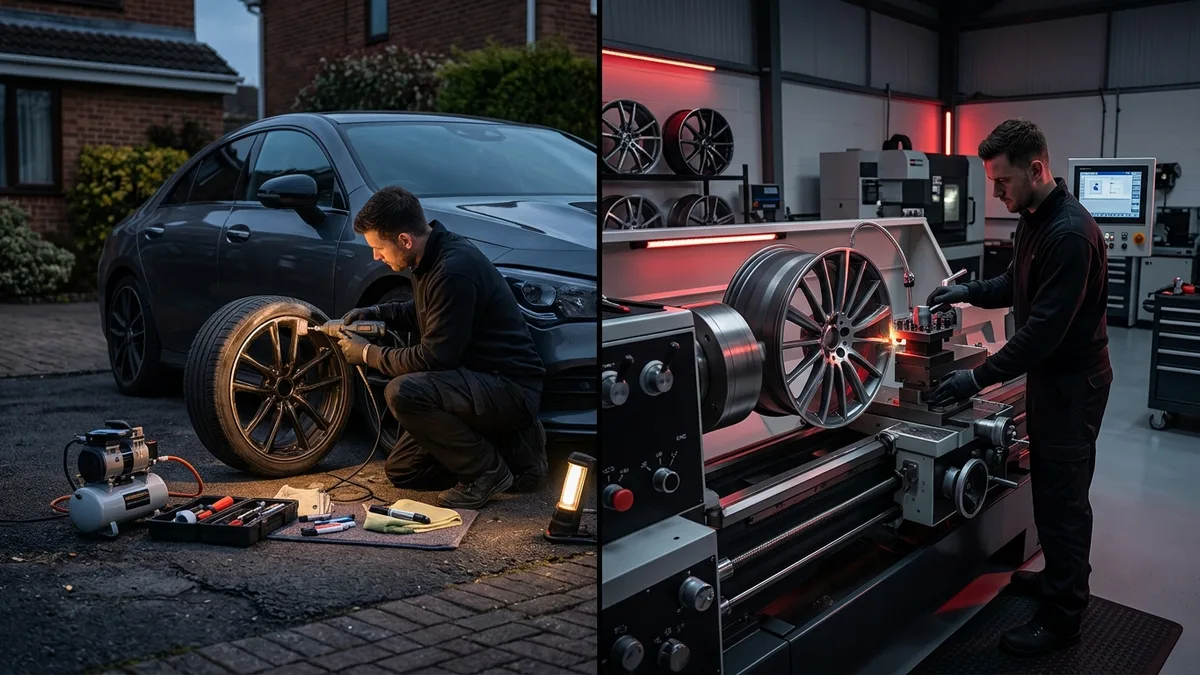
Mobile wheel repair is generally designed around convenience. The technician travels to you and carries out a localised cosmetic repair, often while the wheel remains on the vehicle. For a light kerb mark, small paint chip or limited scuff on a standard painted alloy, this can be a sensible option.
It is particularly appealing when the damage is minor, the wheel is otherwise sound and you need the car available later that day. There is no need to arrange a lift, leave the vehicle at a garage or take time out of a busy week. For fleet vehicles and everyday cars with straightforward cosmetic damage, that practicality has real value.
A good mobile repair can improve the look of a wheel considerably. It can blend a small affected area and prevent a minor blemish from becoming the first thing you notice every time you walk towards the car. The limitation is that it is usually a spot repair, not a full restoration of the entire wheel.
Where mobile repairs have limits
A mobile technician has to work around weather, space, access to power and the fact that the wheel often stays fitted to the car. That restricts the preparation and finishing processes available. It also makes it harder to inspect areas behind the tyre, on the inner rim or around the bead seat, where damage can be missed from a quick visual check.
Colour matching can be very good for a small repair, but an older wheel may have faded or changed in appearance over time. A blended area can look right at first glance yet be more noticeable in bright sunlight, after washing the car or when viewed closely. This is especially relevant on high-gloss black, shadow chrome and complex factory finishes.
Mobile work is also not the right answer for corrosion beneath the lacquer, extensive kerb damage, flaking paint or a wheel that needs its finish stripped back and rebuilt. Covering a deteriorating finish may improve it temporarily, but it does not remove the underlying issue.
Why workshop wheel repair is more comprehensive
Workshop repair begins with a proper assessment. The wheel can be removed, cleaned and checked more thoroughly before any decision is made about the repair. That matters because a smart-looking face can hide corrosion, flat spots or damage on the inside of the rim.
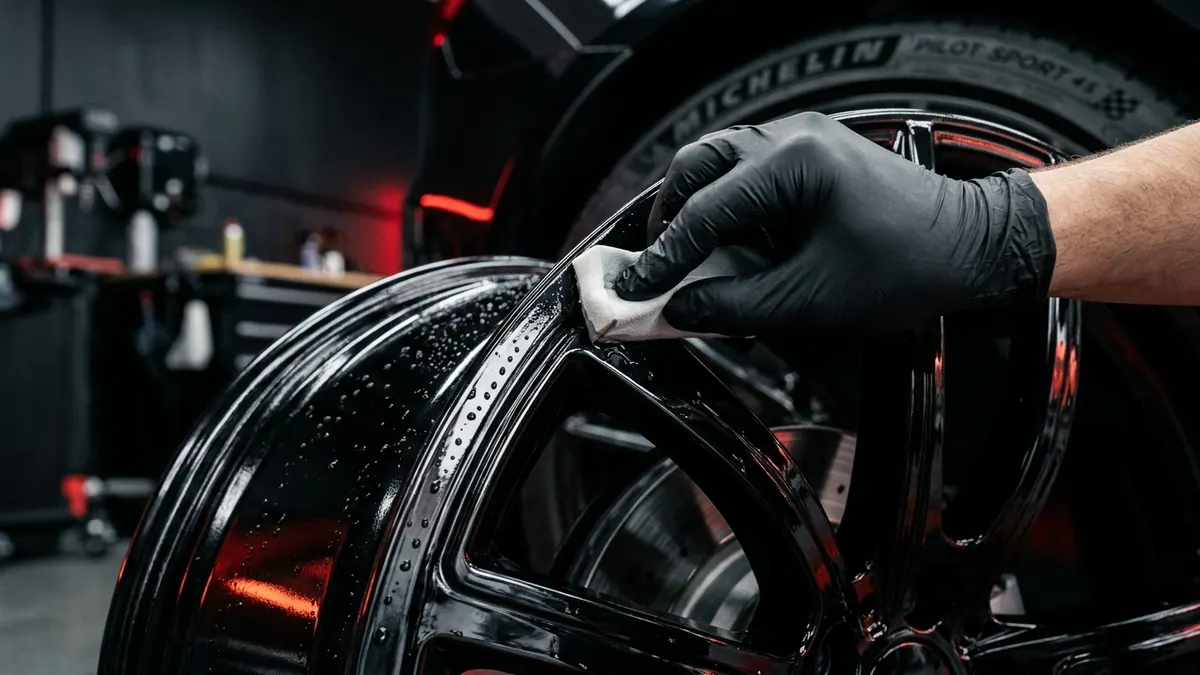
At a specialist workshop, the tyre can be removed where required, allowing the full wheel to be prepared correctly. Damaged coatings can be stripped, corrosion treated and the surface refinished evenly rather than repaired only where the mark is visible. The result is a more consistent appearance across the wheel, including areas that are easy to overlook.
For a full refurbishment, controlled preparation is the difference. Powder coating needs the wheel to be properly prepared and cured to create a durable finish. Diamond-cut wheels need precise machining to restore the crisp, bright face of the alloy before protective lacquer is applied. These are workshop processes, not jobs that can be replicated on a driveway.
Workshop repair is also the sensible route when you want to change the look of the vehicle properly. A full colour change, custom colour match or painted brake calipers deserve controlled finishing conditions. The aim is not merely to make the car look better on collection day, but to give it a finish that stands up to daily driving, cleaning and Scottish weather.
Structural faults need specialist equipment
A vibration through the steering wheel, repeated loss of tyre pressure or a visible dent in the inner rim can point to more than cosmetic damage. A buckled wheel may need straightening, while a crack may require a specialist assessment and repair process. These jobs need the wheel removed and inspected with the appropriate equipment.
Not every damaged alloy is repairable. The location and severity of a crack, the condition of the metal and the wheel's overall integrity all affect the right advice. An honest specialist should tell you when repair is suitable and when replacement is the safer option. No pressure and no hidden costs should mean exactly that.
Mobile vs workshop wheel repair on finish quality
If the aim is to make one light scuff less obvious, mobile repair may offer a good balance of cost, speed and convenience. If you want an OEM-style result across the full wheel, a workshop refurbishment is usually the stronger choice.
This is most noticeable on diamond-cut alloys. Their machined surface catches the light differently from a painted wheel, and a local repair cannot recreate the uniform cut pattern achieved on a specialist lathe. The same applies to widespread lacquer peel — a small touch-in will not stop deterioration spreading beneath the clear coat.
Workshop work also gives better control over the finish's durability. Proper cleaning, preparation, coating and curing all contribute to how well the wheel resists chips, road salt and brake dust. Glasgow roads can be hard on alloys, particularly through winter, so the process behind the finish matters as much as the colour on top.
Cost and turnaround: look beyond the first quote
Mobile repair is often cheaper for minor damage because it is a smaller, localised job with less dismantling and preparation. It can also be quicker, particularly when only one wheel has a superficial mark. For the right type of damage, that is a fair and efficient solution.
Workshop repair can cost more because it involves more labour, equipment and materials. The wheel may need to be removed, the tyre handled, the old coating stripped and the alloy refinished from the ground up. That extra work is not an upsell when the wheel genuinely needs it — it is what creates a lasting result.
It is worth comparing like for like. Ask whether the quoted price covers a local paint blend or a complete refurbishment. Check whether corrosion treatment, tyre removal, balancing and any structural inspection are included where needed. The lowest figure is not always the best value if the wheel needs attention again a few months later.
Turnaround also depends on the repair. A minor cosmetic job may be completed quickly, while a full refurbishment or structural correction needs the right preparation time. Same-day availability can be valuable for suitable repairs, but speed should never come before a safe assessment or a properly cured finish.
When should you choose a workshop?
- Diamond-cut wheels — these need a lathe, not a driveway touch-in.
- Widespread corrosion, peeling lacquer or damage around much of the rim.
- Any vibration at speed, repeated tyre pressure loss, or visible damage on the inner edge.
- A crack, buckle or hard impact from a pothole or kerb.
- Preparing a car for sale or wanting all four wheels to look consistent.
- Premium vehicles where finish authenticity matters.
A workshop is the more dependable route when you want a clear view of the wheel's actual condition, rather than treating only the part you can see while it is parked on the drive.
Before booking any repair, take a close look at the wheel and think about how the car feels to drive. If it is only a small scuff and the wheel is sound, convenience may be the priority. If there is any doubt about corrosion, vibration, cracking or the quality of the finish, let a workshop inspect it properly. A clear answer before work begins is always better than a quick fix you have to question later.