Diamond cut wheel lacquer peel often starts as a tiny cloudy patch near the rim edge or around a spoke. Left alone, it can spread beneath the clear coating, turning a sharp, polished wheel into one that looks tired well before its time. It is a common issue on modern alloys, especially on cars used through Scottish winter roads, and it needs the right repair rather than a quick cover-up.
What diamond cut wheel lacquer peel looks like
A diamond cut alloy has a fine layer of metal machined from its face on a precision lathe. This creates the bright, directional finish that gives many factory wheels their clean, premium appearance. A clear lacquer is then applied to protect the freshly exposed aluminium.
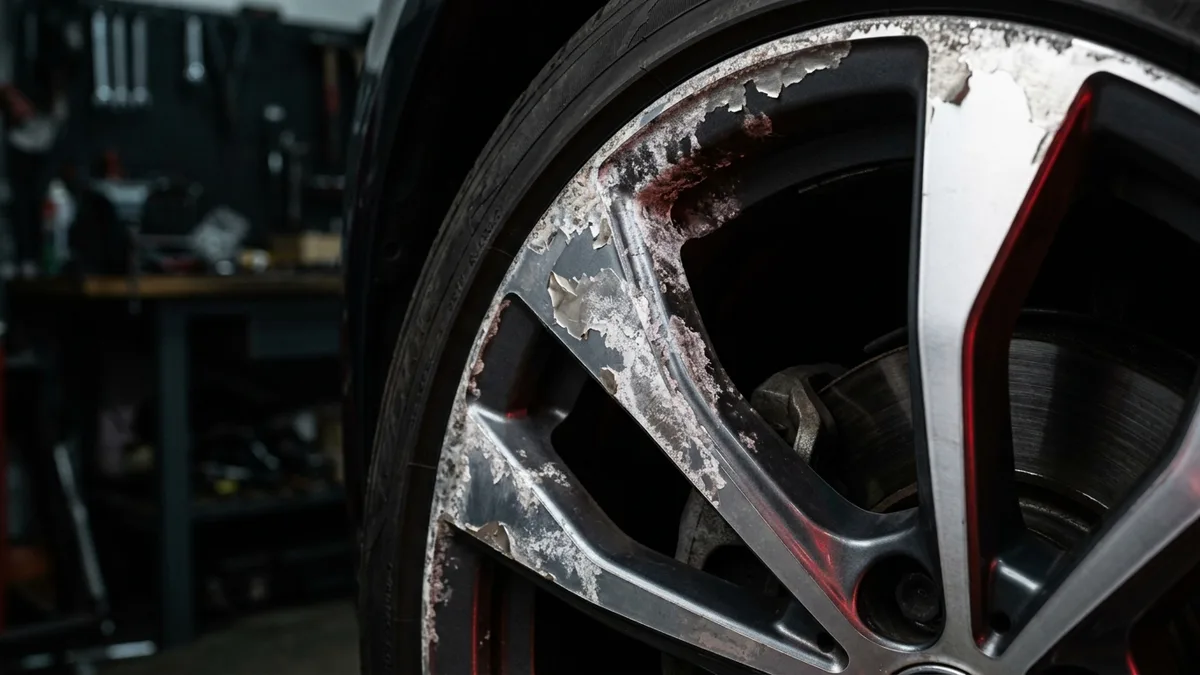
When that lacquer loses its seal, moisture and contamination can get underneath it. The result may look like white milkiness, grey staining, bubbling, flaking, or dark corrosion creeping out from a kerb mark. On lighter-coloured wheels it can be subtle at first. On darker designs with a diamond cut face, it is usually much more noticeable.
The key point is that the problem is not simply dirt sitting on top of the wheel. Once corrosion begins beneath the lacquer, normal washing and polishing will not remove it. In some cases, aggressive polishing can make the surrounding finish look uneven and draw more attention to the damaged area.
Why lacquer peels from diamond cut alloys
Diamond cut wheels look excellent, but their layered construction leaves less margin for damage than a fully painted or powder-coated finish. The lacquer protects the bare machined aluminium. If it is breached, water can travel under the coating.
Kerb damage is often the starting point
Even a light kerb scrape can cut through the lacquer at the outer rim. It may not look serious on the day, particularly if the wheel is dirty, but that small break gives water, road salt and brake dust a route to the aluminium underneath.
The corrosion then spreads sideways below the clear coat. That is why a wheel can develop a much larger patch of peeling lacquer than the original scuff would suggest.
Winter salt and road contamination accelerate it
Glasgow roads see their fair share of rain, grit and winter salt. These contaminants sit around the wheel rim, where they are repeatedly exposed to water and heat from braking. If the lacquer has any weakness, corrosion can take hold quickly.
Regular cleaning helps, but it cannot fully prevent lacquer failure where the protective layer is already compromised. This is one reason a wheel that looked acceptable after autumn can look markedly worse by spring.
Stone chips, harsh cleaners and age all play a part
Stone chips around the spoke faces can break the lacquer just as easily as kerbing. Strong acidic wheel cleaners may also shorten the life of a weakened finish, particularly if they are left on too long or used repeatedly.
Age matters too. Lacquer is not permanent. Heat cycles, UV exposure and years of cleaning gradually affect any painted surface. Diamond cut finishes are particularly unforgiving because corrosion beneath clear lacquer is visible against the bright metal face.
Can peeling lacquer be repaired properly?
Yes, but a lasting repair normally means refurbishing the affected wheel rather than touching in the visible patch. Spot repairs can improve a small cosmetic mark, but they are rarely the best answer when lacquer peel has started spreading across a diamond cut face.
The reason is simple: the corrosion sits beneath the coating. To stop it, the old lacquer and affected finish need to be removed, the wheel needs to be prepared properly, and the face needs to be re-machined or refinished before fresh protection is applied.
A professional inspection will establish whether the damage is limited to the finish or whether there is also a crack, buckle or previous poor repair to address. Cosmetic condition and wheel safety are separate issues, but both deserve attention. There is little value in restoring a flawless face if the alloy is not running true or has structural damage.
The proper diamond cutting process
A quality refurbishment starts with stripping the existing finish and cleaning the wheel thoroughly. Any corrosion is removed and kerb damage is repaired before the wheel is coated and prepared for cutting.
The face is then machined on a diamond cutting lathe. This takes a very fine layer from the alloy to restore the crisp, bright appearance. Finally, clear lacquer is applied and cured to seal the machined surface.
The process requires precision. Cutting too deeply can weaken the design or leave the wheel outside its safe refurbishment tolerance. Most wheels can only be diamond cut a limited number of times, which is why an experienced technician should assess the wheel before promising a result.
When powder coating may be the better option
A diamond cut finish is not always the right long-term choice. If a wheel has been cut several times before, has extensive corrosion, or is used daily on heavily salted roads, a full powder-coated finish can be the more durable and practical route.
Powder coating covers the whole wheel in a uniform colour rather than leaving a machined metal face exposed beneath lacquer. It will not replicate the original diamond cut look, but it is often more forgiving in daily use and gives plenty of scope for a factory-style silver, gloss black, anthracite or custom colour.
This is a trade-off, not a downgrade. Owners of premium vehicles may want to retain the original diamond cut appearance for authenticity. Drivers who are more concerned with durability and easy maintenance may prefer powder coating. Honest advice should take account of the wheel's condition, how the car is used and the result you want to live with.
What not to do when lacquer starts peeling
It is tempting to buy a lacquer pen, use abrasive polish or apply a coating over the damaged section. These can mask the issue briefly, but they do not remove corrosion beneath the existing finish. A clear product applied over lifting lacquer can also trap moisture and make a later repair more difficult.
Avoid sanding the face at home unless you are prepared to accept a non-original finish. Diamond cut wheels have a distinctive machined pattern that hand sanding cannot reproduce. A wheel may look cleaner after DIY work, but the repair often becomes obvious in direct sunlight.
If you need to use the car before repair, keep the wheel clean and avoid harsh chemicals. That will not reverse the peel, but it can limit further contamination while you arrange an inspection.
How to help a refurbished finish last longer
No finish is immune to kerbs, stone chips or winter weather, but sensible care makes a genuine difference.
- Wash wheels regularly with a pH-neutral cleaner and a soft brush, paying attention to the inner barrel and rim edge where salt collects.
- Rinse wheels thoroughly after winter journeys when possible.
- Do not apply strong acidic cleaners to hot wheels, and do not leave any cleaning product to dry on the surface.
- A suitable wheel sealant or ceramic protection can make washing easier and reduce how strongly brake dust adheres.
- Deal with fresh kerb damage promptly — a small scrape repaired before water reaches the aluminium is simpler and less costly than widespread lacquer failure months later.
Get the wheel checked before the damage spreads
Peeling lacquer is usually a cosmetic issue at first, but it rarely improves with time. The sooner the wheel is assessed, the more options you may have for restoring the finish cleanly and matching the other alloys on the car.
At Wheel Fusion, the aim is straightforward: inspect the condition honestly, explain whether diamond cutting or an alternative finish makes better sense, and repair the wheel to a standard worth putting back on your vehicle. A well-finished alloy should look right from the pavement and perform properly on the road.