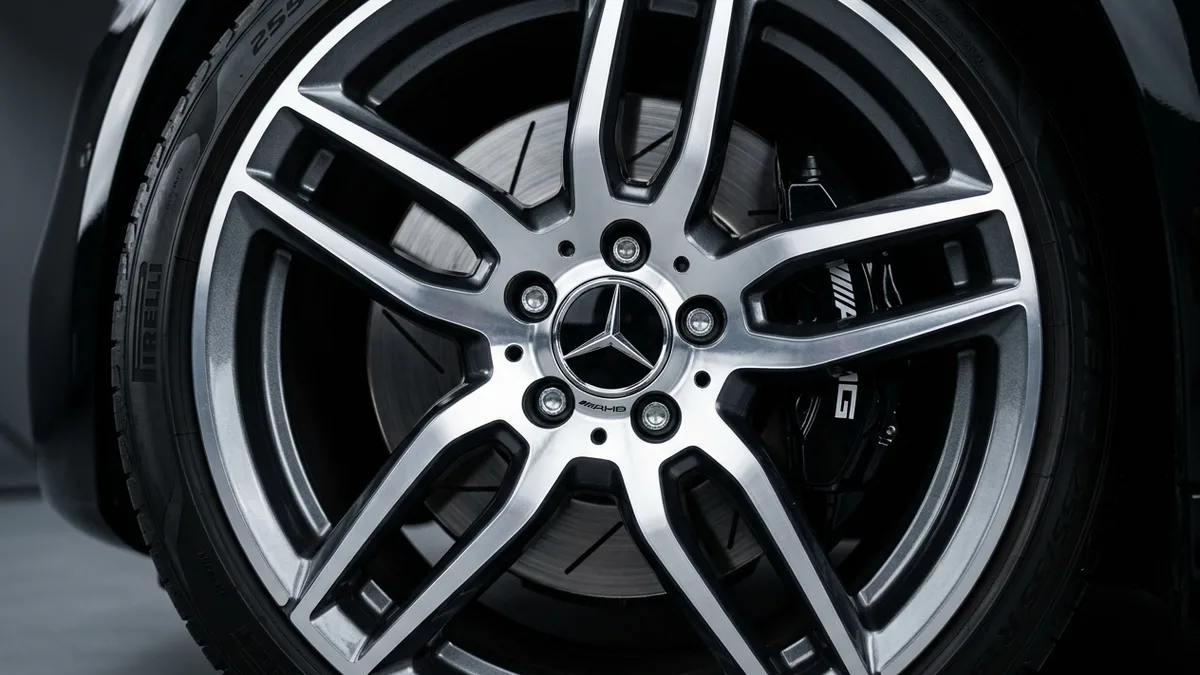
Diamond cut alloys are one of the most popular premium wheel finishes on the market – but the term is widely used without much explanation of what it actually means. If you've seen wheels with a bright, almost mirror-like face contrasting against darker spokes or barrels, you've seen diamond cut alloys.
What Does Diamond Cut Mean on Alloy Wheels?
Diamond cut is a finishing process where the face of an alloy wheel is machined on a CNC (Computer Numerically Controlled) lathe. The lathe removes a fine, precise layer of aluminium from the wheel face, creating a highly polished, reflective surface – the 'diamond cut' finish. The name comes from the diamond-tipped cutting tools used in the process.
The machined face is usually left bare or covered only in a thin clear lacquer for protection. The rest of the wheel – the spokes, barrel and reverse – is typically painted or powder coated in a contrasting colour, most commonly dark grey, anthracite, or gloss black. This contrast between the bright machined face and dark painted areas is the signature look of diamond cut wheels.
Which Cars Come with Diamond Cut Alloys?
Diamond cut alloys are a popular choice on premium and executive vehicles. You'll commonly find them on:
- BMW 3 Series, 5 Series, and 7 Series
- Audi A4, A6, and Q models
- Mercedes-Benz C-Class and E-Class
- Range Rover Sport and Velar
- Volkswagen Golf GTI and R
- Jaguar XE and F-Pace
They're also increasingly common on mid-range vehicles as manufacturers use the finish to add a premium appearance without raising the price of entry-level alloy options.
Why Do Diamond Cut Alloys Look So Good?
The CNC machining process produces an extremely smooth, consistent surface that reflects light in a way painted or powder coated finishes simply can't replicate. The precision of the cut means every spoke face catches light at the same angle, giving the wheel a clean, symmetrical appearance that looks factory-quality because it is factory-quality.
The contrast between the bright machined aluminium and the darker painted areas creates visual depth and dimension – it's why diamond cut wheels look more three-dimensional than single-colour painted wheels.
The Downside of Diamond Cut Alloys
The main disadvantage of diamond cut wheels is that the lacquer protecting the machined face is relatively thin and can begin to peel or show corrosion within a few years, particularly in the UK's climate. Once the lacquer fails, moisture gets underneath, causing the aluminium to oxidise – creating the grey, pitted corrosion you often see on the rim edges of older diamond cut wheels.
When this happens, the only correct fix is to have the wheel fully stripped, re-machined on a CNC lathe, and re-lacquered. Painting over a corroding diamond cut wheel is a temporary fix at best – the corrosion will continue underneath.
Can Diamond Cut Alloys Be Repaired?
Yes – but only properly. A professional diamond cut alloy repair involves stripping the existing finish, addressing any damage or corrosion, and re-machining the face on a CNC lathe to restore the original surface. This is not something that can be done at home or with spray paint.
At Wheel Fusion in Glasgow, we carry out full diamond cut alloy repairs using CNC lathe equipment, restoring the machined face to factory specification. If your diamond cut wheels have started to corrode or you've kerbed the face, get in touch for a free assessment.