A pothole hit can be over in a second: a sharp bang through the cabin, the steering wheel tugs, and you carry on hoping the tyre took the worst of it. But can potholes damage alloy wheels? Absolutely. Even when there is no obvious mark on the face of the wheel, the impact can bend the rim, cause a crack, or affect how the tyre seals against it.
Glasgow roads can be unforgiving, particularly after a hard winter. The size of the pothole, your speed, tyre profile and wheel size all influence the outcome. A shallow pothole at low speed may leave nothing more than a scuff. A deep edge struck on a low-profile tyre can cause damage that affects safety, handling and tyre wear.
Can potholes damage alloy wheels without visible marks?
Yes. Cosmetic damage is often the easiest part to spot, but it is not the only concern. The force of a pothole impact is concentrated at the point where the tyre and rim meet. That can push the inner or outer lip of the alloy out of shape, even if the painted or diamond-cut face still looks presentable.
A slight buckle can be difficult to see with the wheel fitted to the car. It may only show up as a vibration at motorway speeds, an intermittent loss of tyre pressure, or a tyre that needs frequent topping up. In more serious cases, the alloy may crack around the rim edge or spoke area.
Alloy wheels are light and strong, but they are less forgiving of a sharp impact than many drivers realise. Modern larger-diameter wheels, especially those paired with low-profile tyres, have less rubber sidewall available to cushion the blow. That does not mean every pothole will ruin an alloy wheel. It does mean a hard impact deserves a proper check rather than a quick glance at the kerbside.
What damage can a pothole cause?
Pothole damage usually falls into three areas: cosmetic marks, distortion and cracking. Each needs a different response.
Scuffs and chips
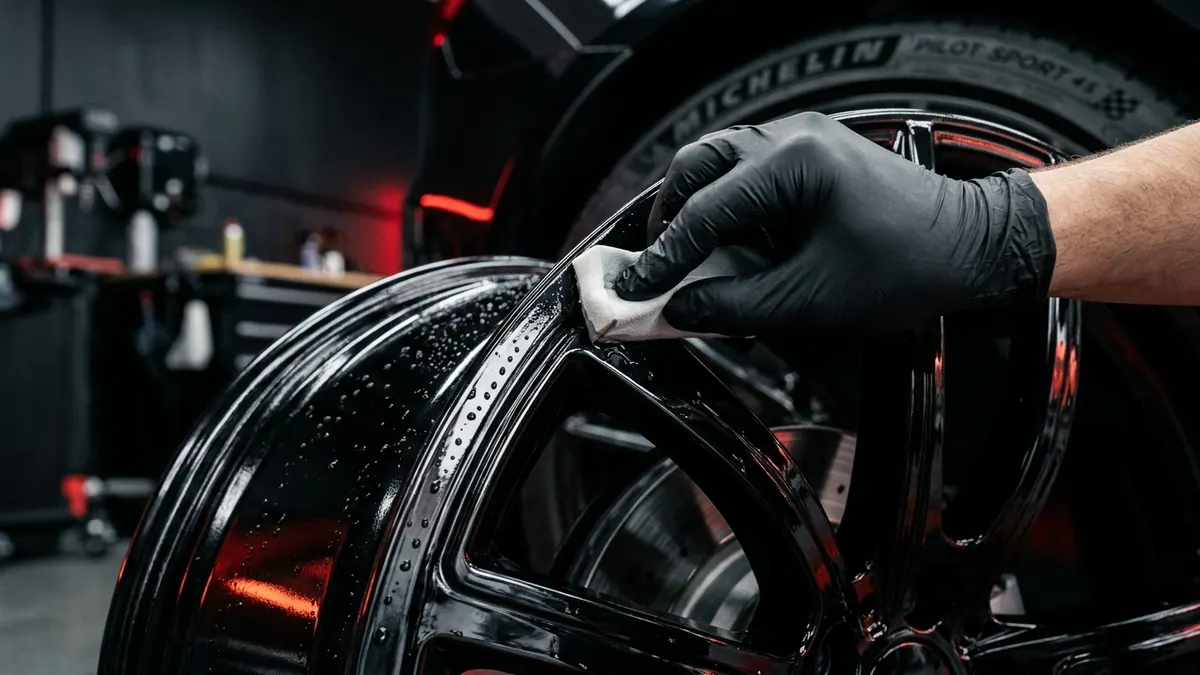
The pothole edge can scrape the rim, chip paint or lacquer, and damage a diamond-cut finish. This is mainly an appearance issue at first. However, exposed metal can allow corrosion to develop beneath the coating, particularly through wet Scottish weather and winter road salt. Repairing chips early helps preserve the finish and avoids a small defect becoming a wider refurbishment job.
A buckled or bent rim
A buckle happens when the lip of the wheel is pushed out of its original round shape. A minor buckle may produce a faint vibration through the steering wheel. A more pronounced bend can affect tyre sealing, cause a persistent slow puncture, or make the car feel unsettled at speed.
The location matters. Damage to a front wheel is more likely to be felt through the steering, while rear-wheel damage may feel like a vibration through the seat or floor. The symptoms can also be mistaken for a wheel-balancing issue, worn tyres or suspension wear. That is why inspection on the right equipment is more reliable than guessing.
Cracks in the alloy
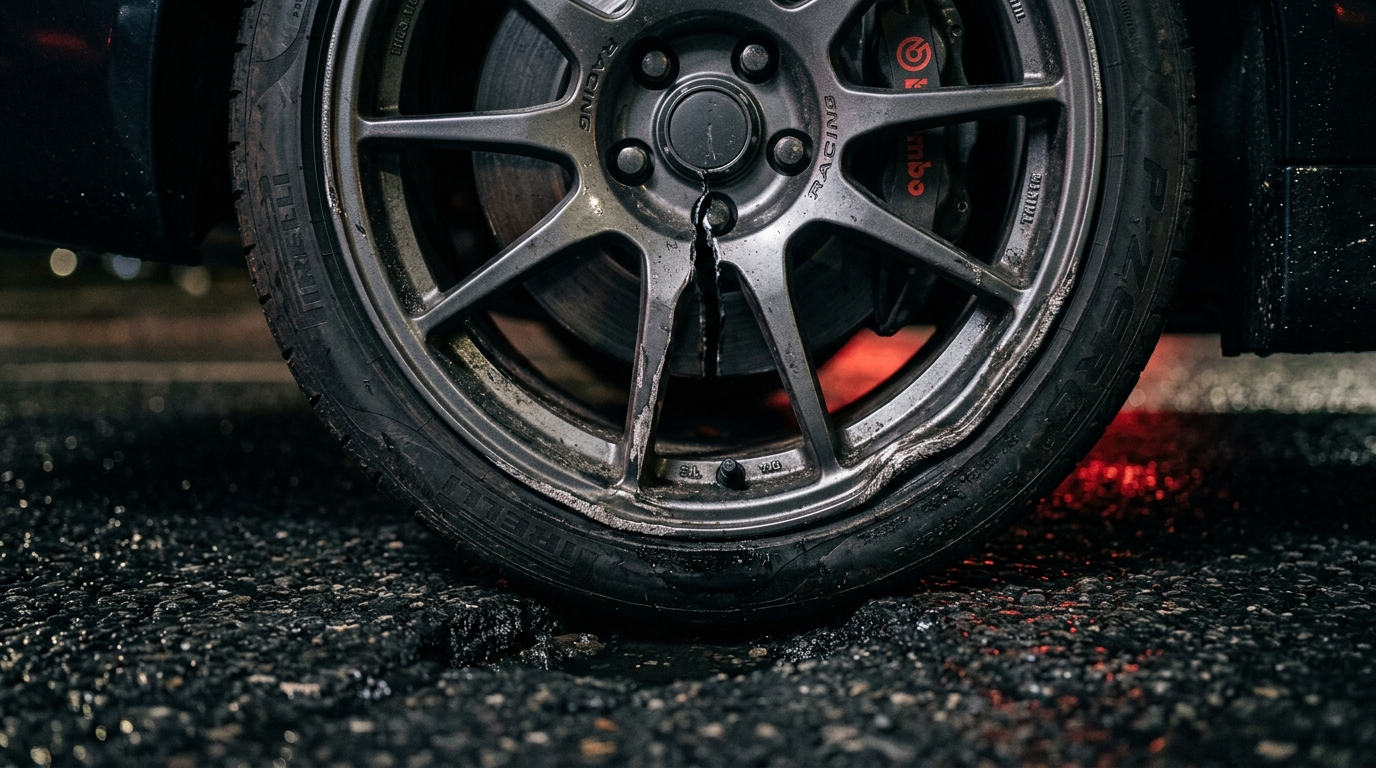
A crack is more serious than a cosmetic chip or a minor distortion. It can lead to air loss and may spread with repeated road impacts. Cracks are often found around the inner barrel, where they are not visible from outside the vehicle, or near the spokes after a particularly severe strike.
Not every cracked wheel is suitable for repair. The position, size and nature of the crack must be assessed by a specialist before any work is considered. Safety comes first. If the wheel cannot be restored to a safe standard, replacement is the honest answer.
Signs your alloy wheel may be damaged
You do not need to be a technician to recognise that something has changed after hitting a pothole. Pay attention to what the car is telling you, especially if the impact was hard enough to make you wince.
- A new vibration at certain speeds, particularly noticeable between 40 and 70 mph.
- A steering wheel that pulls to one side or sits off-centre without input.
- A knocking or clunking sensation over rough or uneven surfaces.
- A tyre-pressure warning light appearing shortly after the impact.
- A bulge, cut or pinch mark in the tyre sidewall.
- A tyre that needs topping up with air more often than usual.
Check the wheel face and rim edge for fresh marks, then look at the tyre carefully. If it is safe to do so, inspect the inside edge of the wheel too, although hidden bends and cracks are easy to miss without removing the wheel. Avoid relying on appearance alone. A wheel can look fine and still be out of shape.
Why driving on a buckled wheel is a bad gamble
It is tempting to leave a vibration alone if the car still gets from A to B. The problem is that a damaged alloy wheel rarely affects only the wheel. An uneven rim can stop the tyre from running true, accelerating uneven tread wear and placing extra strain on suspension and steering components.
There is also the question of grip. A tyre that cannot seal correctly may lose pressure gradually. Underinflation increases heat, worsens handling and can make the tyre more vulnerable to further damage. In wet conditions, where road surfaces are already less predictable, that is a risk not worth taking.
The cost trade-off is straightforward. A timely inspection and structural correction can often prevent a damaged wheel from contributing to tyre replacement, alignment work or more extensive repairs later. It is not about being alarmist. It is about fixing the fault before it has a chance to affect the rest of the car.
How professionals check and repair pothole damage
A proper wheel assessment begins with the tyre removed and the alloy cleaned, so the whole barrel, rim and spoke area can be inspected. The wheel is then checked for run-out — the amount it moves from side to side or up and down as it rotates. This identifies bends that may not be obvious by eye.
For a wheel that is buckled but structurally sound, precision straightening equipment can gradually return the rim to its correct shape. This is controlled work, not a quick hammer-and-hope fix. The aim is to restore smooth rotation and tyre seating while protecting the integrity of the alloy.
Where a crack is found, a specialist will assess whether a safe alloy wheel welding repair is appropriate. If it is, the area must be properly prepared, welded and checked before the wheel is returned to service. Cosmetic work, such as powder coating, colour matching or diamond cutting, can then be considered if the finish has also suffered damage.
At Wheel Fusion, the practical first step is a visual inspection and clear advice on what the wheel needs. Some pothole damage calls for structural correction, some only needs cosmetic refurbishment, and some wheels should not be repaired at all. No hidden costs. No pressure. Just an honest assessment based on the condition of the wheel.
Can you prevent pothole damage to alloys?
You cannot avoid every pothole, particularly in poor weather or on unfamiliar roads, but a few habits reduce the chances of damage. Keep tyres inflated to the vehicle manufacturer's recommended pressures, as underinflated tyres provide less protection for the rim. Check pressures when tyres are cold and before longer journeys.
Give potholes as much room as is safely possible, but avoid swerving suddenly into another lane or towards the kerb. If a hit is unavoidable, reduce speed smoothly before the impact rather than braking hard while the wheel is in the pothole. Hard braking shifts more load onto the front wheels and can make the impact worse.
Wheel and tyre choice also plays a part. Large alloys with very low-profile tyres can look excellent and sharpen steering response, but they offer less cushioning on broken road surfaces. There is no one right setup for every driver. If your regular routes include rough roads, a sensible tyre profile can offer useful protection without compromising the look of the car.
A pothole strike does not automatically mean your alloys are finished. What matters is whether the wheel is still round, sealed, crack-free and safe to use. If the car feels different afterwards, trust that instinct and get it checked. A prompt inspection can protect your tyres, preserve the finish and keep a small impact from becoming a larger repair.