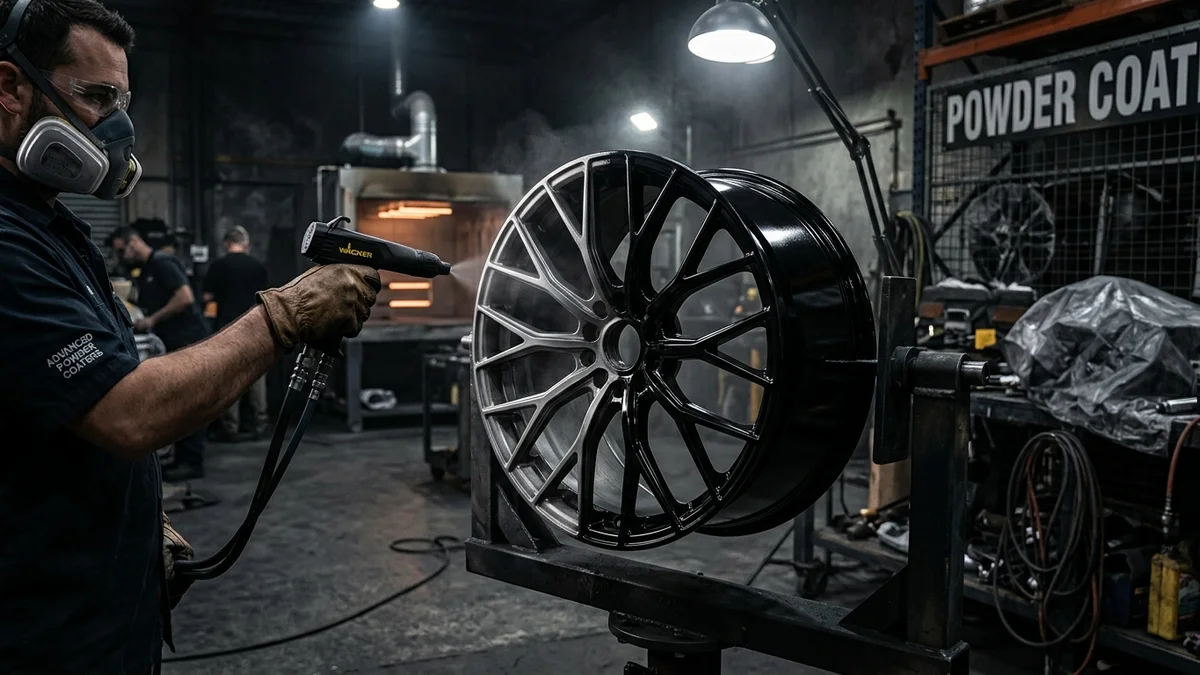
A tired alloy can make an otherwise well-kept car look neglected. Peeling lacquer, white corrosion, brake dust staining and kerb damage all take their toll, particularly on Scottish roads. This alloy powder coating guide explains what the process involves, when it is the right repair, and what you should expect from a finish designed to look good and work hard.
Powder coating is not simply a quick coat of paint. Done properly, it is a full refurbishment process that starts with the condition of the wheel itself. The finish matters, but the preparation underneath it is what determines whether your wheels still look sharp after daily use, wet weather and repeated cleaning.
What is alloy powder coating?
Powder coating is a dry finishing method used to create a durable coloured layer on an alloy wheel. Instead of applying wet paint, a specialist applies electrically charged powder to the prepared wheel. The wheel then goes into an oven, where the powder melts, flows and cures into an even protective coating.
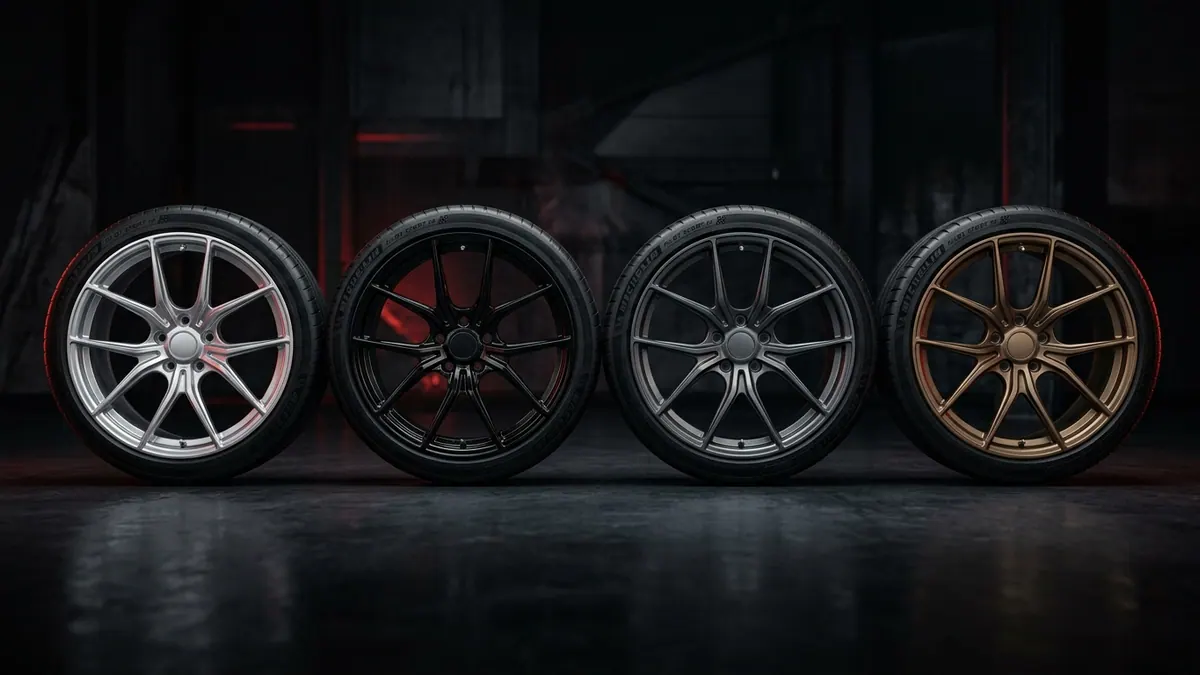
The result is a hard-wearing finish with excellent coverage around the spokes, inner barrel and awkward areas that are difficult to treat evenly by hand. It is a popular choice for full-colour wheels, including gloss black, satin black, silver, anthracite, gunmetal and bespoke colours.
For many drivers, powder coating offers the best balance of appearance, protection and value. It can give kerbed or weathered wheels a clean, factory-style finish while adding a stronger defence against moisture, road salt and general wear. That said, no coating is indestructible. Harsh chemicals, deep impacts and fresh kerb strikes can still damage even the best finish.
The alloy powder coating process, step by step
A proper refurbishment should never begin by coating over damage. The wheel needs to be assessed first, both for cosmetic issues and for faults that could affect safety or performance.
Inspection comes before appearance
The first job is a visual and structural inspection. Surface corrosion, lacquer peel and light kerb marks are generally straightforward cosmetic concerns. Cracks, weld repairs, bends and buckles need closer attention before any finish is considered.
A wheel that has lost air, vibrates through the steering wheel or has taken a heavy pothole impact may require straightening, crack repair or welding. Powder coating will improve the appearance of the alloy, but it cannot correct a structural issue. A reputable specialist will explain this clearly, with no pressure to proceed with cosmetic work until the wheel is fit for use.
Stripping removes failed coatings properly
Old paint, lacquer and corrosion need to be removed to create a sound base. Depending on the wheel and its existing finish, this may involve chemical stripping and media blasting. The aim is to expose clean metal without causing unnecessary damage to the alloy.
This stage often reveals the true condition of the wheel. What looked like a small patch of bubbling lacquer may have spread corrosion underneath. Dealing with it now is far better than sealing it beneath a fresh coating, where it can return later and spoil the finish.
Repairs and preparation shape the final result
Once stripped, the wheel can be repaired and prepared. Light kerb damage is dressed back to restore a smooth rim edge. Corrosion pits and imperfections are addressed as far as the wheel's condition allows, then the surface is cleaned carefully before coating.
Powder application and oven curing
The prepared wheel is coated with powder in a controlled environment. The electrostatic charge helps the powder cling evenly to the metal, including complex spoke designs and the inner areas of the wheel.
It is then oven cured at a specified temperature for the chosen coating system. This is where the powder becomes the smooth, durable finish you see on the completed wheel. Correct curing is essential: under-curing can reduce durability, while poor temperature control can affect the quality of the finish.
Tyres, valves and balancing weights are removed before refurbishment and refitted afterwards where required. A final inspection checks the colour, coverage and overall presentation before the wheel goes back on the vehicle.
Powder coating or diamond cutting?
These two finishes are often confused, but they produce very different looks. Powder coating covers the wheel in one continuous colour. It suits drivers who want a durable solid finish, whether that is original silver, gloss black or a more individual custom shade.
Diamond cutting creates a bright, machined metal face. A precision lathe removes a fine layer from selected areas of the wheel, usually the face, before lacquer is applied for protection. It can look excellent on modern OEM-style wheels, but the lacquered machined surface can be more vulnerable to corrosion once damaged.
Some wheels combine both methods. For example, a wheel may have powder-coated spokes and inner barrel, with a diamond-cut face. The best option depends on the original design, the condition of the wheel and how the car is used. For a daily driver facing winter roads, a full powder-coated finish is often the more forgiving long-term choice.
Choosing the right colour and finish
Black remains a popular choice, but it is not the only route to a smart result. Satin black tends to hide light dust and marks better than high gloss, while anthracite and gunmetal give a subtle performance look that works well on many vehicles. Silver is often the right choice when you want to retain a clean, factory-correct appearance.
Custom colours can transform a car, but consider the practical side as well as the visual impact. Very light colours show brake dust quickly. High-gloss finishes can highlight scratches and need more careful washing. A bespoke colour may also be harder to match exactly if one wheel needs repair later.
If resale value is a priority, an OEM-style finish is usually the safest option. If the vehicle is yours for the long term, choosing a colour that suits its paintwork, brake calipers and overall character can make the refurbishment feel far more personal.
How long does a powder-coated finish last?
The honest answer is that it depends on preparation, coating quality and how the wheels are treated afterwards. A professionally prepared and cured powder-coated wheel should provide years of service. Daily mileage, winter salt, road condition, cleaning products and kerb contact all influence its lifespan.
The biggest causes of premature failure are corrosion left beneath the coating, poor preparation, aggressive acidic cleaners and damage that breaks the protective layer. Once bare metal is exposed, moisture can work underneath the coating and create bubbling or lifting around the damaged area.
That is why a low-cost cosmetic touch-up is not always the economical choice. It may look acceptable initially, but it cannot offer the same protection as stripping, repairing and refinishing the wheel correctly.
Caring for powder-coated wheels
Good aftercare is simple and makes a real difference. Let the wheels cool before cleaning them, especially after a long drive. Use a pH-neutral wheel cleaner or mild car shampoo, a soft brush and clean water. Rinse thoroughly around the wheel nuts, valve area and inner barrel, where brake dust and salt can build up.
Avoid harsh acid-based cleaners, stiff brushes and using a pressure washer at very close range around damaged edges. If you catch a kerb or notice chipped coating, arrange an inspection sooner rather than later. Small damage is easier to assess before corrosion spreads.
During winter, regular washing is particularly worthwhile. Road salt does not only affect the visible face of the wheel. It collects behind spokes and around the inner rim, where it can sit unnoticed for weeks.
When professional refurbishment is worth it
If your wheels are simply dirty, a thorough clean may be all they need. But recurring lacquer peel, corrosion, widespread kerbing or a finish that has lost its depth are signs that refurbishment is the more sensible route. The same applies if you are preparing a vehicle for sale, refreshing a cherished car or changing its look with a custom colour.
At Wheel Fusion, the focus is on more than making an alloy look better for collection day. Every wheel should be assessed with its condition, safety and intended finish in mind. That means clear advice on whether powder coating is suitable, whether a repair is needed first, and what result you can realistically expect.
A fresh finish can change the whole stance of a car, but the best refurbishment is one that still stands up to everyday driving. Choose the finish you like, protect it with sensible aftercare, and make sure the work starts with a proper inspection rather than a shortcut.