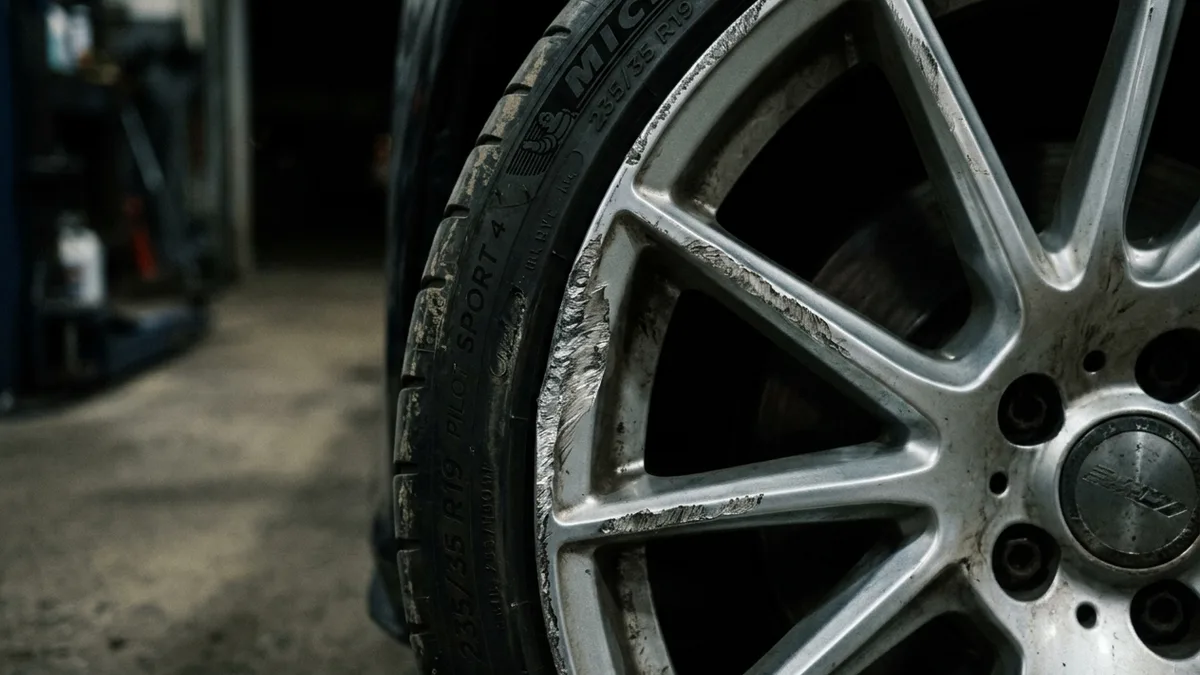
Diamond cut alloy wheels are eye-catching when pristine – but they show damage quickly. A single kerb strike on a machined spoke face is immediately visible, and the repair options are more limited than with painted wheels. This guide explains what diamond cut alloy repair actually involves, when it works, and when full refurbishment is the right call.
Why Diamond Cut Repair Is Different
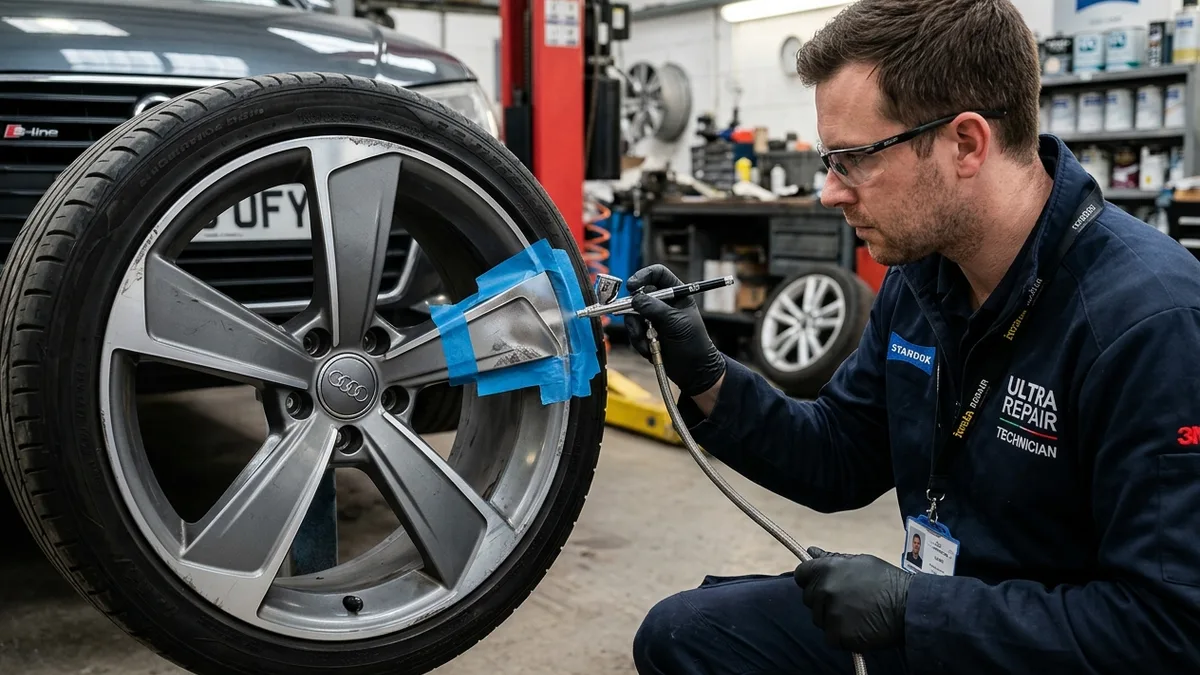
With a standard painted alloy wheel, minor damage can often be repaired locally – the damaged area is filled, primed, and colour-matched with a spray finish. Diamond cut wheels can't be repaired this way. The machined face is not painted; it's bare or lacquered aluminium. Any attempt to fill and spray-paint a damaged area on a diamond cut face will be obviously visible – the sheen and reflectivity of spray paint cannot replicate a CNC-machined aluminium surface.
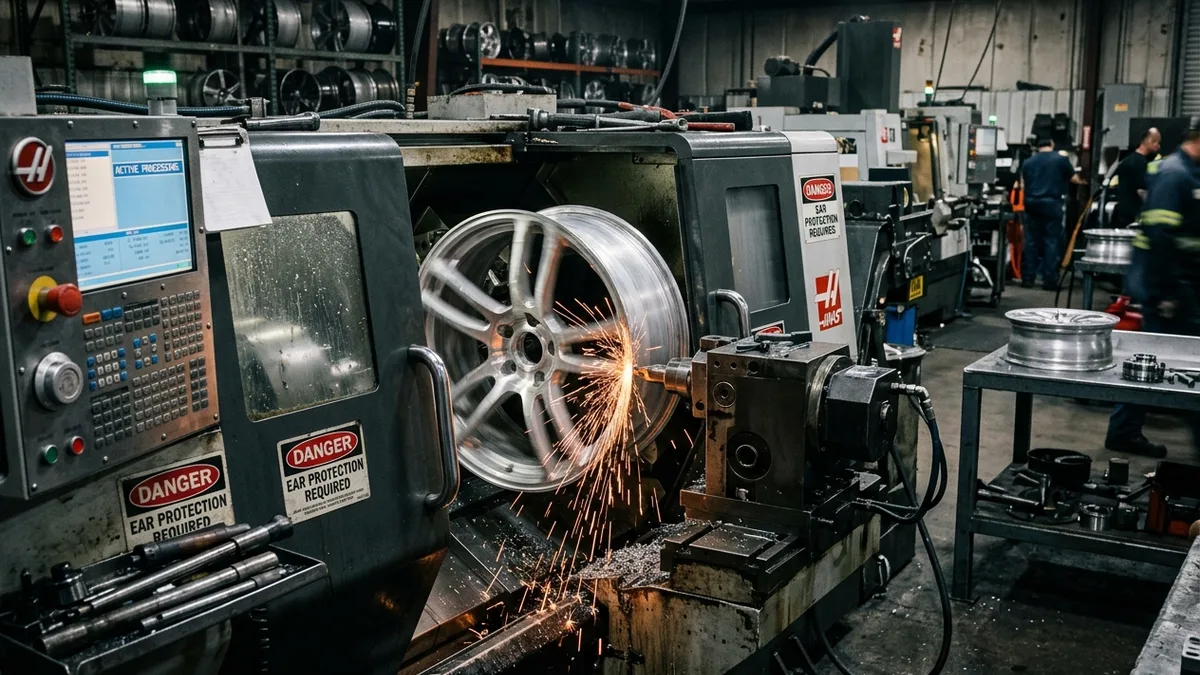
The correct repair for a damaged diamond cut wheel is to re-machine the entire face on a CNC lathe. This removes a thin layer of aluminium from the full face of the wheel, eliminating the damage and restoring the uniform, reflective finish.
When Can a Diamond Cut Wheel Be Re-Machined?
Re-machining is possible when the wheel is structurally sound and has sufficient metal thickness remaining to allow material to be removed. Most alloy wheels can be re-machined 2—3 times during their lifetime before the metal becomes too thin. If a wheel has already been re-machined multiple times, or the damage is very deep, replacement may be the only safe option.
- The wheel is not cracked, bent or buckled
- There is sufficient metal thickness remaining
- Damage is on the face (not bead seat or structural areas)
- Corrosion hasn't penetrated too deeply into the alloy
What About Lacquer Peeling?
Lacquer peeling is one of the most common issues on diamond cut wheels, particularly on cars that are a few years old. Once the lacquer begins to fail, moisture gets under the surface and the aluminium oxidises rapidly. The wheel face takes on a grey, pitted appearance.
At this stage, the only correct fix is re-machining. The existing lacquer and oxidised aluminium are removed by the CNC lathe, a fresh machined surface is created, and a new coat of clear lacquer is applied. Applying new lacquer over failing old lacquer without re-machining is not a proper repair – it will peel again quickly.
The Re-Machining Process at Wheel Fusion
- The wheel is fully stripped – existing lacquer, paint, and any filler removed.
- Any structural damage (cracks, buckles) is addressed before machining.
- The wheel is mounted on our CNC lathe and the face is machined to remove damage and restore the surface.
- The machined face is inspected for consistency and quality.
- A fresh coat of clear lacquer is applied to protect the new surface.
- The painted areas (spokes, barrel) are refinished in the original or customer-chosen colour.
- Final quality inspection before the wheel is returned.
How Long Does Diamond Cut Repair Take?
A standard diamond cut repair at Wheel Fusion typically takes 1 full day. We'll let you know at booking if your job requires anything different. Drop-off and collection is available from our Darnley workshop.