A cracked alloy wheel is not always an automatic replacement job, but it is never something to ignore. This cracked alloy wheel repair example shows how a specialist workshop separates a repairable rim from one that is no longer safe to put back on the road — before any welding or cosmetic work begins.
A customer brings in a 19-inch alloy from a daily-driven BMW after a sharp pothole impact. The tyre has been losing pressure slowly, there is a vibration through the steering wheel at motorway speed, and a hairline crack is visible on the inside edge of the rim. From the outside, the wheel still looks presentable. That is exactly why proper inspection matters.
Cracked Alloy Wheel Repair Example: The Initial Assessment
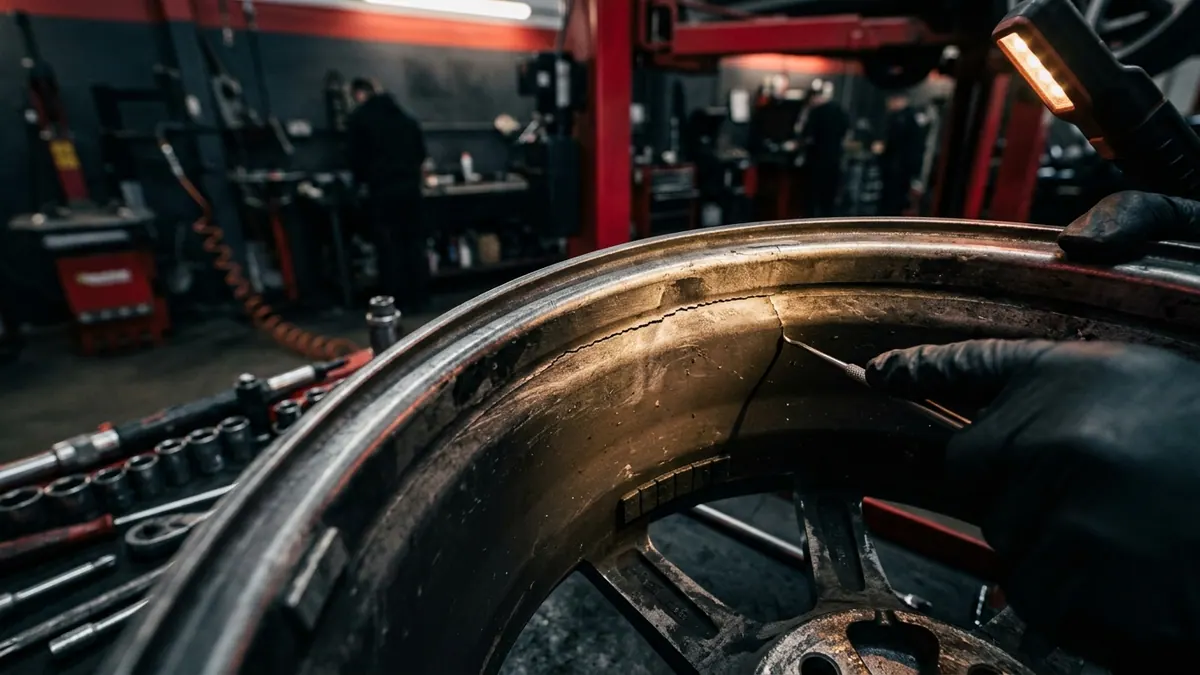
The first job is to remove the wheel from the vehicle and inspect it properly with the tyre off. A crack hidden behind the tyre bead, brake dust or road grime can look small at first glance, while the damage around it may be more significant.
In this example, the crack sits on the inner barrel, close to the bead seat. It is around 25mm long and caused by the wheel striking a pothole hard enough to deform the rim slightly. The wheel is also checked for a buckle, flat spots, corrosion around the bead area and any evidence of previous repairs.
This location is often repairable, but only after a full assessment. A crack through a wheel spoke, around the centre bore, near a bolt hole or across a heavily stressed area raises a much bigger safety concern. The same applies where there are several cracks, extensive distortion or signs that the aluminium has become brittle.
Why the Wheel Was Repairable
This wheel has one clean crack, with no branching damage and no serious impact fracture through the spokes or mounting area. Its overall structure remains sound, and the slight buckle is within a level that can be corrected using precision straightening equipment.
The customer is advised that the wheel needs both structural work and finishing work. Welding the visible split alone would not resolve the vibration or guarantee an airtight tyre seal. The damaged area must be prepared correctly, the crack repaired, the wheel straightened where needed, then pressure-tested and balanced before refitting.
That is the difference between a proper wheel repair and a quick cosmetic fix. The goal is not merely to make the crack disappear. It is to restore the wheel's ability to run true, hold pressure and perform safely in normal road use.
The Repair Process, Step by Step
The tyre, valve and wheel weights are removed first. This gives the technician clear access to the damaged barrel and prevents heat from affecting parts that should not be exposed during the repair.
The wheel is then thoroughly cleaned and stripped around the crack. Old paint, corrosion and contamination have to be removed so the full extent of the damage is visible. The crack is carefully opened and prepared to allow a controlled weld to penetrate the affected area rather than simply sitting across the surface.
A qualified technician carries out the alloy weld using the appropriate process for the wheel material. Heat control is critical. Too much heat, poor preparation or an unsuitable welding technique can weaken the surrounding aluminium and leave the repair looking acceptable but performing badly.
Once the weld has cooled correctly, the repaired section is dressed back to a smooth profile.
On this wheel, the slight buckle is corrected separately using precision straightening equipment. The rim is measured during this process so the technician can assess radial and lateral run-out — in plain terms, whether the wheel is round and runs straight rather than hopping or wobbling as it turns.
The repair is then checked carefully for cracks, distortion and finish quality. The tyre bead seat receives particular attention because even a sound weld is of little use if corrosion or damage prevents the tyre from sealing properly.
Testing Is What Makes the Difference
A repaired alloy should not go straight from welding bay to vehicle. In this example, the wheel is pressure-tested before the tyre is refitted to confirm that the repaired area and bead seat hold air correctly.
It is then fitted with the tyre, inflated to the correct pressure and balanced. Balancing identifies whether the wheel and tyre assembly can rotate smoothly at speed. Where a driver has reported vibration, this final stage is essential. A crack repair may be structurally successful, but an unresolved buckle or tyre issue can still affect how the car drives.
The wheel is also visually inspected after testing. Any movement around the repaired area, air loss or remaining excessive run-out means the job stops there. Safety comes before the sale.
For customers who want a complete result, the wheel can then be refinished to suit the existing set. Depending on the design and condition, that may involve powder coating, custom colour matching or diamond cutting. On a wheel with a diamond-cut face, the available material and original finish need to be assessed before machining. There is no value in chasing a perfect cosmetic finish if it compromises the wheel's long-term condition.
When a Cracked Alloy Wheel Should Be Replaced
There are cases where welding is not the right answer. An honest workshop will explain this clearly, even when replacement is the less convenient outcome.
Replacement is commonly recommended when damage affects the spokes, hub area, bolt holes or centre section. A wheel with multiple cracks, a major buckle, heavy corrosion, repeated previous welds or a fracture caused by a serious collision may not be a sensible candidate for repair. The same is true if testing shows the wheel cannot be made round enough to run safely.
It also depends on the vehicle and how it is used. A high-performance car, a heavily loaded vehicle or a wheel subjected to frequent poor-road impacts deserves a particularly cautious assessment. Wheel repair is not a one-size-fits-all service.
What the Customer Can Expect Afterwards
In this repair example, the customer gets the wheel back holding pressure, running true and balanced, with the repaired inner-barrel area refinished for protection. They no longer have the slow puncture or motorway vibration that prompted the visit.
Turnaround can sometimes be the same day for straightforward work, but it depends on the damage, wheel design, finish required and workshop workload. A wheel needing extensive straightening, specialist machining or a full colour change may take longer. Clear advice and a transparent quote should come before work starts, with no pressure to approve a repair that is not justified.
If you have hit a pothole, clipped a kerb hard or noticed repeated pressure loss, do not judge the wheel by its outer face alone. A proper inspection can tell you whether it needs a safe repair, a full refurbishment or replacement — and that knowledge is worth having before the next journey.