
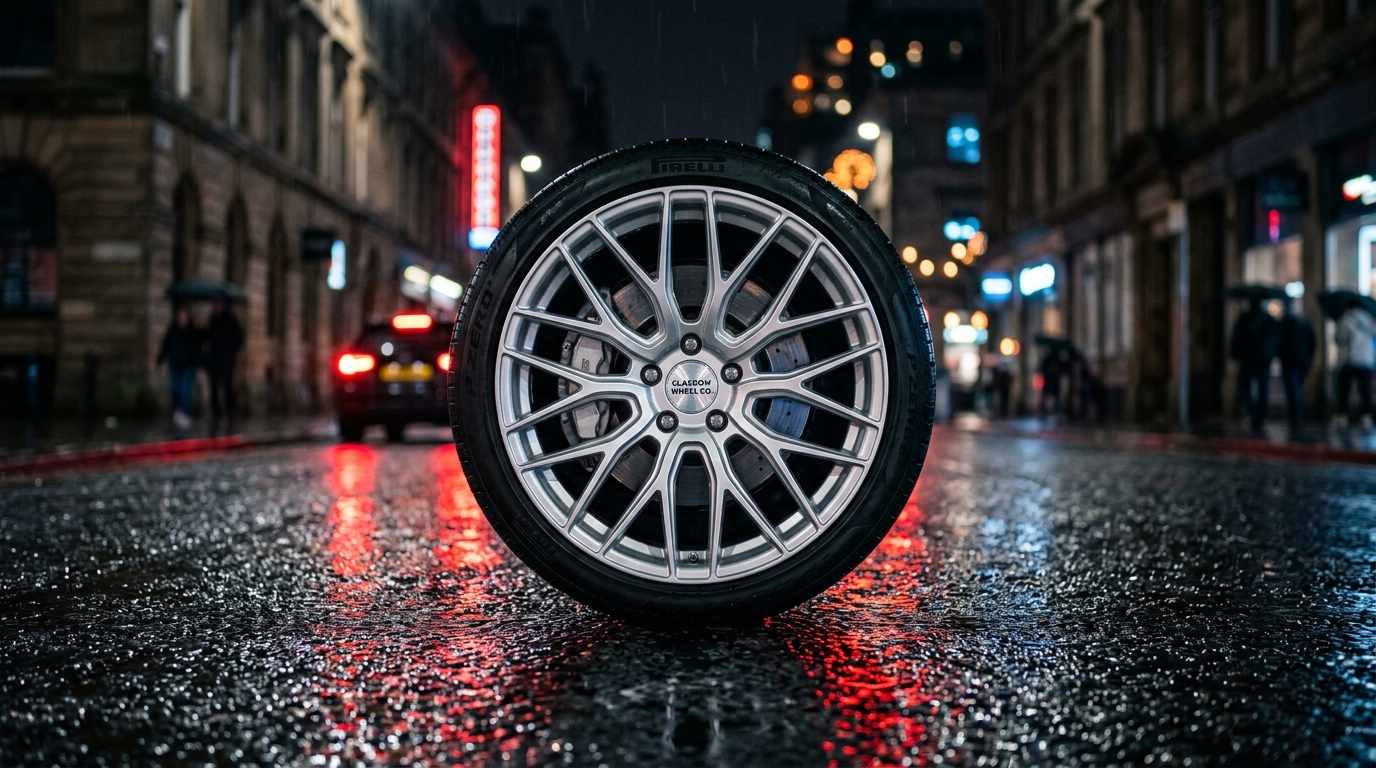
A wheel can go from spotless to badly marked in one tight parking manoeuvre or one pothole hit. The best ways to prevent wheel damage are not complicated, but they do require a little more attention than most drivers give their tyres, kerbs and road surface. That attention protects more than the look of your alloys — it can also help you spot issues that affect comfort, tyre wear and safety.
At Wheel Fusion, we see the same causes of damage every day: kerb scuffs, poorly inflated tyres, deep potholes, corrosion around the rim and impacts that leave a wheel buckled or cracked. Some are unavoidable. Most can be reduced with sensible driving habits and regular checks.
Best ways to prevent wheel damage every day
The biggest difference usually comes from how you approach the final few metres of a journey. Tight city-centre bays, supermarket car parks and narrow residential streets put alloy wheels in harm's way far more often than a long motorway run.
Give kerbs more room than you think you need
Kerbing is the most common cosmetic damage we repair. It often happens at low speed, when drivers are concentrating on traffic, pedestrians or parking sensors rather than the position of the front wheel.
When parallel parking, approach slowly and use your mirrors to watch the kerb line. Do not rely solely on parking sensors — they are useful for obstacles behind or around the car, but they do not protect the wheel face from a kerb. If the bay is tight, take an extra shunt rather than forcing the car into position.
Be equally careful at drive-throughs, multi-storey car parks and raised traffic islands. Low-profile tyres offer less protection between the road and the alloy rim, so a light touch that might leave a standard wheel unmarked can still cause a scuff or chip.
Keep tyres at the correct pressure
Correct tyre pressure is one of the simplest forms of wheel protection. An under-inflated tyre has less ability to absorb an impact, increasing the chance that a pothole strike will bend the rim or damage the tyre sidewall. It can also make steering feel less precise and accelerate tyre wear.
Check pressures at least once a month, and before a long journey, when the tyres are cold. Use the vehicle manufacturer's recommended pressures for your normal load, not the maximum figure printed on the tyre sidewall. If you regularly carry passengers, equipment or luggage, check whether your car specifies a higher loaded pressure.
Over-inflation is not the answer either. A tyre that is too hard can give a harsher ride and may transmit more impact force to the wheel. The aim is the correct pressure, checked consistently.
Read the road ahead, especially after winter
Glasgow roads can be unforgiving after wet and freezing weather. Potholes often hold water, making their depth difficult to judge until it is too late. Scan ahead where possible and leave enough room behind the vehicle in front to see the road surface.
If you cannot avoid a pothole safely, reduce speed before reaching it. Try not to brake sharply while the wheel is in the hole, as this can load the front axle and increase the force of impact. Keep a firm grip on the steering wheel and allow the vehicle to pass through as smoothly as conditions permit.
Avoid swerving suddenly around defects if doing so would put you into another lane, towards a cyclist or close to a kerb. A damaged alloy is frustrating, but safety comes first.
Protect the finish as well as the wheel structure
A wheel does not need a heavy impact to deteriorate. Brake dust, road salt, poor cleaning products and damaged lacquer can gradually spoil the finish, especially through a Scottish winter. Once a coating is compromised, moisture can work underneath it and corrosion may spread from a small chip.
- Wash wheels regularly with a pH-neutral wheel cleaner and a soft brush that reaches behind the spokes.
- Clean one wheel at a time, and never apply cleaner to hot wheels after a drive.
- Rinse thoroughly, then dry where practical to reduce water spotting.
- Avoid aggressive acidic products and hard brushes unless you know they are suitable for the wheel finish.
- Diamond-cut alloys deserve particular care — their machined face is protected by lacquer, and once that layer is breached, moisture can lead to cloudy white corrosion beneath the surface.
Stone chips and kerb marks should not be ignored simply because they are small. A prompt inspection can establish whether the issue is only cosmetic or whether the rim has suffered a more serious impact. Early repair often prevents corrosion spreading and protects the quality of the final finish.
Take speed humps and ramps straight on
Speed humps, steep car-park ramps and dropped kerbs can catch wheels at an awkward angle. Slow down before the obstacle and, where road layout allows, approach it as squarely as possible. Crossing at an angle can place more force on one edge of the rim and tyre.
This matters even more on vehicles with larger alloys, low-profile tyres, sports suspension or a heavy front end. Those set-ups can look excellent and offer sharp handling, but there is usually less tyre sidewall available to cushion an impact. It is a trade-off worth understanding before choosing wheel sizes or suspension modifications.
Check for warning signs after an impact
Not every pothole strike causes visible damage. A wheel may look fine but develop a slight buckle, a hairline crack or a loss of balance that becomes obvious only at speed. Pay attention if the steering wheel starts vibrating, the car pulls to one side, a tyre repeatedly loses pressure or you hear a new thump as the wheel turns.
A free visual inspection by a wheel specialist can provide clarity quickly. Precision straightening equipment can identify and correct certain buckles, while certified repair work can assess whether a cracked alloy is suitable for repair. The right course of action depends on the wheel's condition, crack location and structural integrity. Honest advice matters here: not every wheel should be repaired.
Be careful with tyre fitting and wheel storage
Damage can also happen off the road. When tyres are changed, poor handling or worn equipment can mark the rim edge, particularly on painted, polished or diamond-cut alloys. Use a reputable fitter, and inspect the wheels before leaving if you have had new tyres, balancing or seasonal wheel changes carried out.
If you store a spare set of wheels, clean and dry them first. Keep them away from standing moisture and chemicals, and avoid stacking bare alloy faces directly against rough concrete. Wheel bags or protective covers are a sensible precaution for owners who change between summer and winter set-ups.
When fitting aftermarket wheels, make sure the size, offset, centre bore and load rating are correct for the vehicle. A wheel that rubs on suspension components, sits too far out or requires unsuitable spacers is more likely to suffer damage and can create handling issues. Good fitment is not just about appearance.
When prevention is no longer enough
Even careful drivers catch a kerb now and then. The key is not to let a small issue become a bigger one. Light scuffs can often be restored cleanly, while peeling lacquer, corrosion, buckles and cracks need a proper assessment before they affect the tyre seal or driving experience.
If a wheel has taken a hard impact, feels different on the road or is losing air, arrange an inspection rather than hoping it settles down. Fast, skilled repair can restore the appearance of your alloys, but more importantly, it gives you confidence that the wheel is fit for the road ahead.