
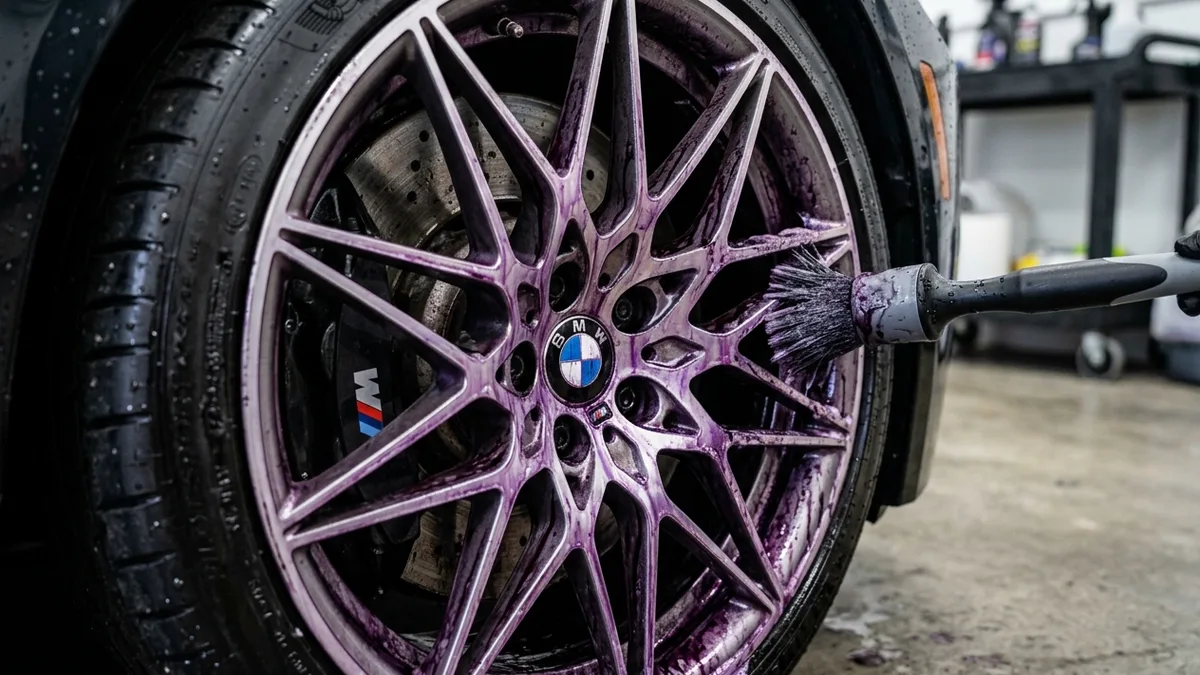
Keeping alloy wheels clean protects them – brake dust is corrosive, and letting it accumulate accelerates surface degradation, particularly on painted and lacquered finishes. But not all wheel cleaners are safe for all wheel types. Using the wrong product on diamond cut or polished alloys can cause permanent damage.
At Wheel Fusion, we see the results of incorrect wheel care regularly. Here's our honest breakdown of the best alloy wheel cleaners and what to use on each finish type.
What to Look For in a Wheel Cleaner
- pH neutral formula for painted and lacquered wheels
- Acid-free for diamond cut and polished alloys
- Iron fallout remover (purple/red colour change) for brake dust
- Non-drip gel for better cling time on vertical surfaces
- Compatibility with your specific wheel finish
Best for Standard Painted Alloys
For standard painted or powder coated wheels, a pH-neutral iron fallout remover is the most effective regular cleaner. These products react with iron particles (brake dust) and turn purple or red on contact, making it easy to see the contamination being removed. Rinse off thoroughly after the reaction completes.
Recommended approach: Apply iron fallout remover, allow 3—5 minutes dwell time, agitate with a soft wheel brush if needed, rinse thoroughly, then dry with a microfibre. Follow up with a wheel sealant every few months for added protection.
Best for Diamond Cut Alloys
Diamond cut wheels require an acid-free, pH-neutral cleaner only. Acid-based cleaners (even mild ones) will attack the lacquer and the bare aluminium, accelerating the very corrosion you're trying to prevent. Avoid any product labelled 'alloy brightener' or 'acid wheel cleaner' on diamond cut wheels.
Use a dedicated pH-neutral wheel cleaner with gentle agitation from a soft brush. Avoid abrasive pads or harsh brushes on the machined face – they will create fine scratches that dull the finish over time.
Best for Powder Coated Alloys
Powder coat is the most durable finish and tolerates a wider range of cleaners. Standard pH-neutral iron fallout removers work well. Avoid very aggressive acid cleaners as these can still dull the surface over repeated use.
What to Avoid on All Alloy Wheels
- Acid-based cleaners on diamond cut or polished alloys
- Wire brushes or abrasive pads – these scratch even powder coat
- Dish soap / washing up liquid – strips protective coatings over time
- High-pressure washing directly at wheel edges – can force water into cracks or past the tyre bead
- Leaving any cleaner to dry on the wheel surface – always rinse thoroughly
How Often Should You Clean Your Alloys?
In the UK, every 1—2 weeks is ideal for daily-driven cars, or more frequently in winter when grit and road salt are present. The longer brake dust sits on the wheel, the harder it is to remove and the greater the risk of surface damage.